Most imaging centers track study volume. Most track revenue. Almost none track the one metric that most clearly reveals whether their teleradiology partner is actually performing: STAT utilization rate.
It is the percentage of your monthly read volume ordered as STAT rather than routine. And in our experience, most practices either do not track it, or have long since stopped questioning ...
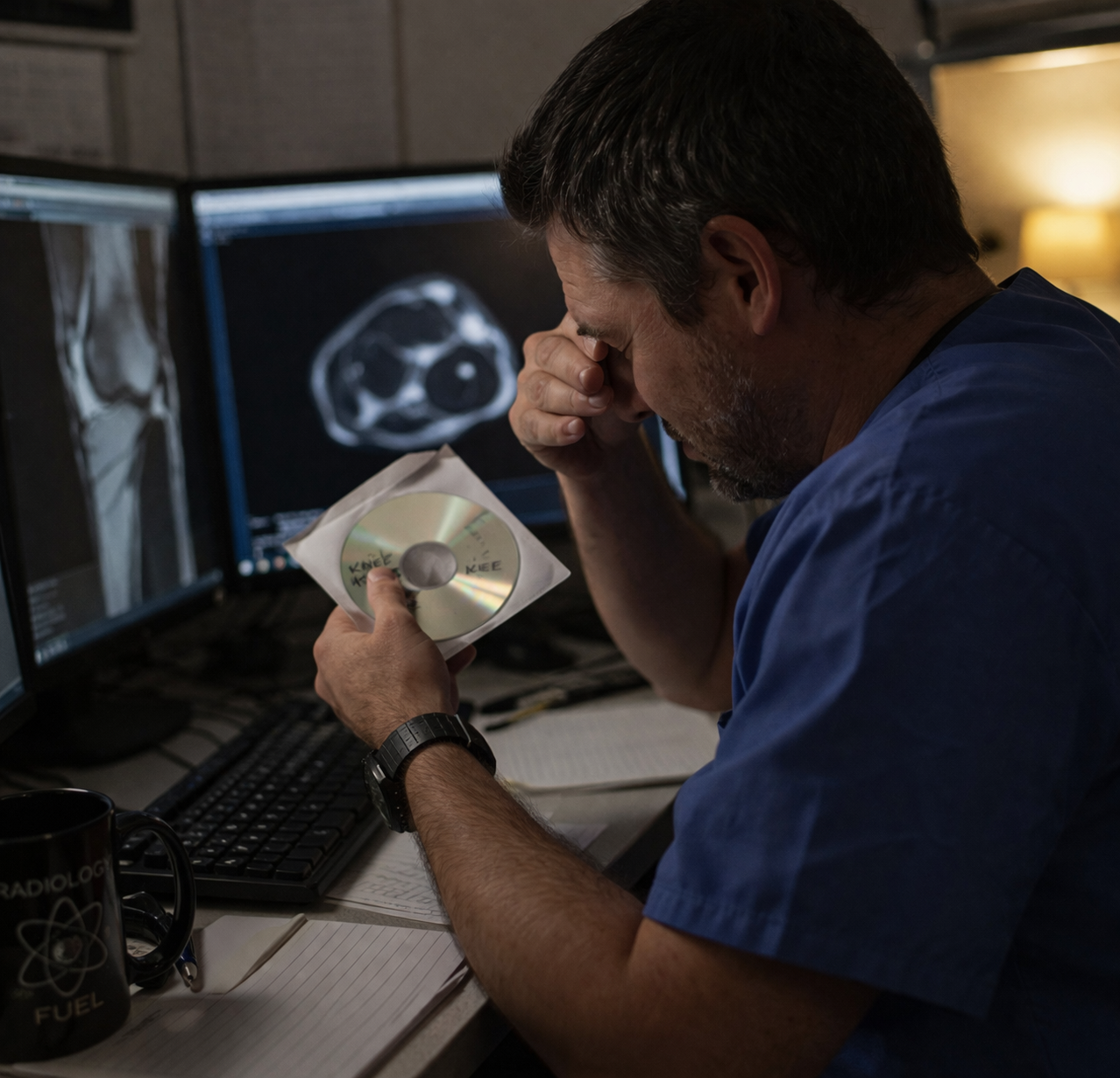
Manual image sharing doesn’t usually show up as a line item on an invoice, but the costs add up all the same.
A technologist uploads a CD. A PACS admin fixes a mismatched study. A radiologist waits for prior imaging to arrive. None of these steps seem significant on their own, but together they create a steady drag on productivity.
The real cost shows up in time and ...
As a physician recruiter, I speak with radiologists every day. So, when I read this article, none of it surprised me.
Imaging volumes keep going up, but the workload isn’t being shared evenly. And when that happens, it usually lands the same way. A handful of radiologists end up carrying more and more of the weight.
I hear about this every day from radiologists across the ...
A recent Radiology Business article highlights the continuing saga: radiologists, technologists, physicists, and nuclear medicine professionals are urging federal leaders to fix image sharing because the current process is costly, inefficient, and outdated.
(Say it louder for the folks in the back!)
Whether you’re a patient or a healthcare professional, anyone who has tried to share ...
An 8-day MRI turnaround time might not feel like a major issue at first glance. The work is getting done, reports are going out, and nothing is technically broken.
But for an IDTF or independent imaging center, that kind of delay has a way of quietly working against you.
Referring physicians, especially orthopaedic and spine specialists, rely on timely MRI reports to keep their own ...