
Healthcare organizations face escalating challenges when relying on outdated healthcare infrastructures. Slow digital image retrieval, limited interoperability, and high maintenance costs all hinder patient care and radiology efficiency. In an era where medical imaging technology has become critical to diagnostic workflows, maintaining legacy systems can hold your facility back from achieving optimal outcomes.
Legacy systems often lack the advanced image capabilities needed to keep pace with modern billing rules and regulatory requirements. As the healthcare industry evolves, facilities bound by old legacy methods struggle with data security, integration barriers, and sluggish performance. These hurdles not only frustrate radiologists and healthcare professionals but can also compromise patient data and slow down essential diagnostic processes.
Fortunately, there is a way forward. By understanding the pitfalls of legacy PACS and exploring modernizing legacy systems in healthcare with cutting-edge solutions—like cloud-based and AI-enhanced PACS software—you can streamline your workflow, reduce overhead, and enhance patient care. In the following sections, we will walk you through the key reasons to upgrade, the benefits of a new system, and how Radsource ProtonPACS can seamlessly integrate with your current infrastructure. Let’s dive into the details.
Key Takeaways
Key Takeaway #1: Modern PACS solutions address the inefficiencies and security risks of legacy healthcare systems by offering cloud-based, AI-enhanced features and robust integration options.
Key Takeaway #2: A strategic PACS upgrade involves carefully assessing your current PACS, planning data migration meticulously, and implementing a scalable solution that supports future innovations like artificial intelligence.
Key Takeaway #3: Radsource ProtonPACS simplifies the step in the PACS modernization journey with a hybrid cloud-based model, advanced imaging tools, and a pay-per-study pricing approach that reduces upfront investments.
Understanding Legacy Healthcare Systems and Their Challenges
What is a Legacy Healthcare System?
Legacy healthcare systems refer to outdated healthcare applications, hardware, and processes—particularly in radiology and imaging—that no longer meet modern healthcare demands. Within the radiology department, these systems can hinder interoperability and hamper patient care. For instance, if a hospital information system cannot integrate seamlessly with the PACS server, radiologists must navigate multiple platforms just to access a single digital image.
Legacy software often relies on old legacy infrastructures that cannot accommodate advanced image or data storage needs. These systems in healthcare communications infrastructure might run on obsolete protocols that stall progress toward a more efficient healthcare environment.
Outdated healthcare platforms can slow down diagnostic tasks, complicate communication among healthcare providers, and weaken data security. As a result, patients experience delayed results, while healthcare workers grapple with the frustration of using a legacy healthcare system that offers little room for expansion or innovation.
Types of Legacy Healthcare Systems in Medical Imaging
Legacy healthcare challenges manifest in various forms. Understanding the types of legacy systems is crucial for charting a pathway to modernization.
Often called legacy PACS, these older deployments might be missing robust integration with electronic health record platforms, limiting how images are transmitted digitally via PACS. Their onsite servers lack the scalability of a hybrid or cloud-based solution, making them prone to downtime..
Some radiology departments still rely on film-based archives. This approach, though historically standard, is time-consuming, space-inefficient, and incompatible with the needs of modern healthcare and management systems.
While hybrid solutions might offer some cloud tools, they often fail to provide the full benefits of modern PACS—especially if integration with radiology information system (RIS) or hospital information system is incomplete. These systems make partial attempts at modernization but still fall short of fully optimized workflows.
Why Legacy PACS No Longer Meet Modern Healthcare Needs
Healthcare organizations must invest in reliable, scalable, and secure solutions. Legacy systems often do not align with these requirements and can introduce unnecessary barriers.
- Slow digital image retrieval: If staff must wait for images to load, diagnostic delays can occur. For healthcare professionals working in fast-paced hospital settings, such lag time is unacceptable.
- Lack of interoperability with EHRs and RIS: Legacy software might not integrate with electronic health record (EHR) or RIS platforms, creating data silos and forcing duplicative data entry. This diminishes overall workflow efficiency.
- Security risks and compliance issues (HIPAA, DICOM): With outdated healthcare security measures, systems are more vulnerable to breaches. Compliance with HIPAA or DICOM standard can be compromised if the legacy infrastructure is not robust enough to maintain encryption and secure data storage.
- High maintenance costs and infrastructure limitations: Current legacy systems typically demand substantial financial investment to keep them running. The older the hardware, the more difficult—and expensive—it becomes to source replacement parts and maintain stable performance.
Why Healthcare Systems Need PACS Modernization
The Role of PACS in a Modern Healthcare System
A PACS (Picture Archiving and Communication System) is the backbone of efficient imaging workflows, enabling data from the legacy environment to be stored and accessed digitally. Modern PACS solutions integrate advanced features that help reduce costs and improve the patient experience.
A modern PACS system automates tasks such as image storage and retrieval, enabling faster turnaround times. By embracing new PACS platforms, a hospital can seamlessly share digital imaging and communications across departments, significantly boosting operational efficiency.
Automated protocol management can speed up processes and reduce human error. By lowering manual workloads, healthcare system budgets are better allocated, and staff can focus on patient-facing tasks rather than administrative hurdles.
Key Signs Your Healthcare Legacy System Needs an Upgrade
Clinging to legacy healthcare solutions can be detrimental. Recognizing the red flags early helps streamline the implementation of a PACS upgrade.
If your current PACS is plagued by downtime, it disrupts workflows, hampering patient care and frustrating radiologists. This is a clear indicator that a new system is required.
An inability to integrate with a hospital information system or an EHR system is a red flag. Data silos reduce the value of collected patient data, ultimately harming operational effectiveness.
Telemedicine and teleradiology are pivotal in modern healthcare. If your legacy software cannot support remote diagnostics or quick retrieval, it’s time to consider an upgrade.
The Modern Approach: Cloud-Based & Hybrid PACS
What Modern PACS Offer That Legacy Systems Cannot
Modern healthcare demands solutions that provide rapid, reliable, and secure imaging. Modern PACS deliver on all these fronts.
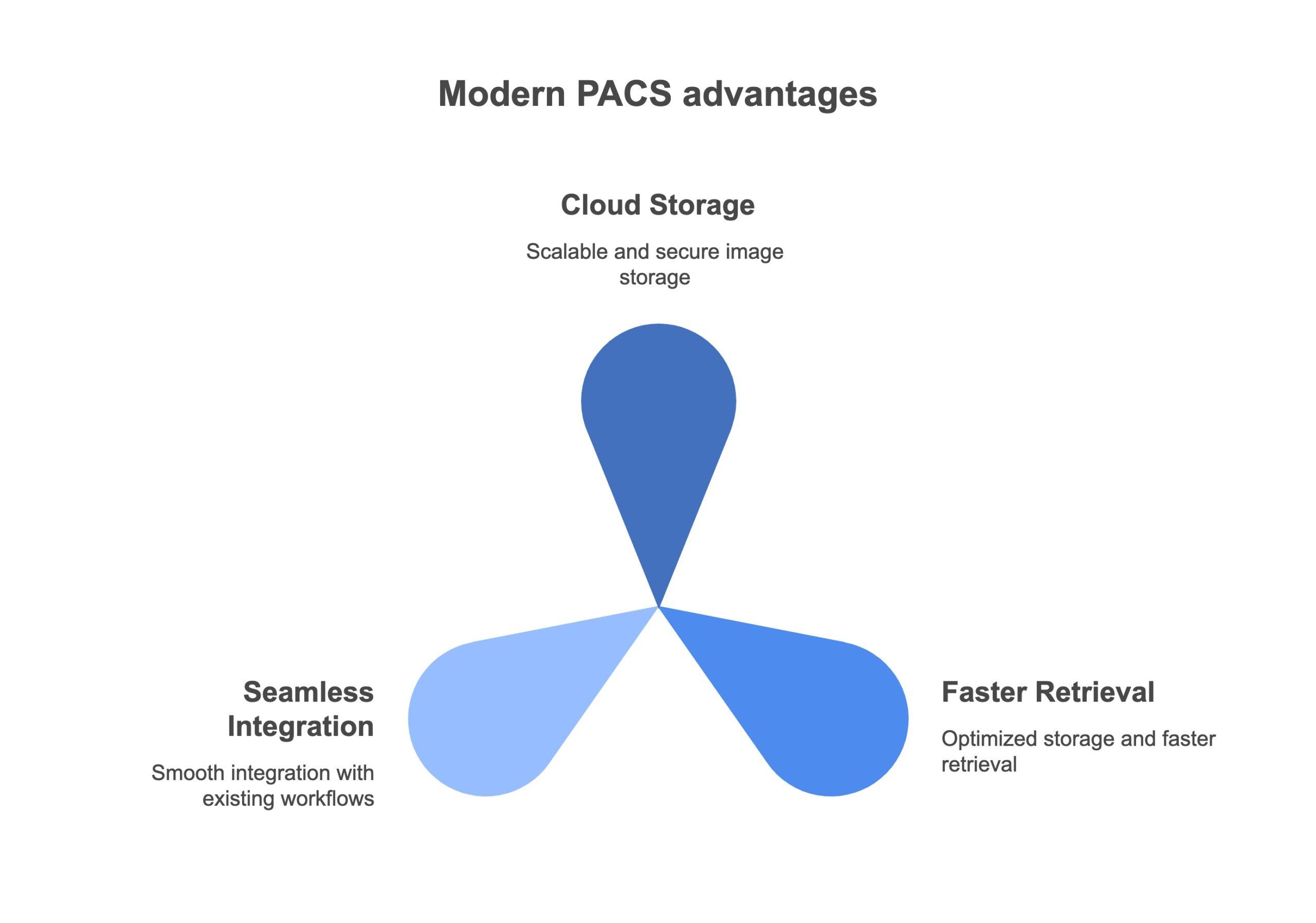
- Cloud storage for scalable, secure imaging – Cloud-based image storage enables healthcare institutions to sidestep hefty on-premises costs. Data storage expands as you grow, reducing the strain on local servers and offering robust data security protocols that comply with regulations like HIPAA.
- Faster, more accurate digital image retrieval – Modern PACS leverages advanced architecture to optimize storage and retrieval. This speed improves diagnostic efficiency and allows radiologists to collaborate in real-time, enhancing patient care.
- Seamless integration with EHRs and RIS – Thanks to vendor-neutral design, many PACS solutions can integrate smoothly with existing workflows. This synergy ensures that patient data is easily shared between various departments—boosting the continuum of care.
Modern PACS Advantages
Why Radsource ProtonPACS is the Best Solution for Modern Healthcare Needs
Radsource ProtonPACS stands out among PACS vendor offerings by combining cutting-edge technology and superior support.
Hybrid Cloud-Based PACS: On-site reliability with cloud scalability.
This approach merges the reliability of local servers with the expansion potential of cloud architecture, making it easier to handle peak loads and large volumes of medical image data.
Advanced Imaging & Radiology Tools: High-resolution visualization
ProtonPACS incorporates next-level features for radiologists, including robust digital imaging and communications in medicine compatibility, advanced image annotations, and real-time collaboration.
Vendor-Neutral Archive (VNA) Compatibility: Ensuring seamless integration with existing systems.
By supporting open standards like DICOM, ProtonPACS works smoothly with your hospital information and radiology information, minimizing complexities in data migration.
Cost-Effective Pay-Per-Study Model: Reducing upfront investment.
Instead of hefty capital expenditures, healthcare facilities can scale usage based on need. This model is especially appealing for smaller hospitals or clinics with limited budgets.
Key Steps in Upgrading from Legacy PACS to Modern PACS
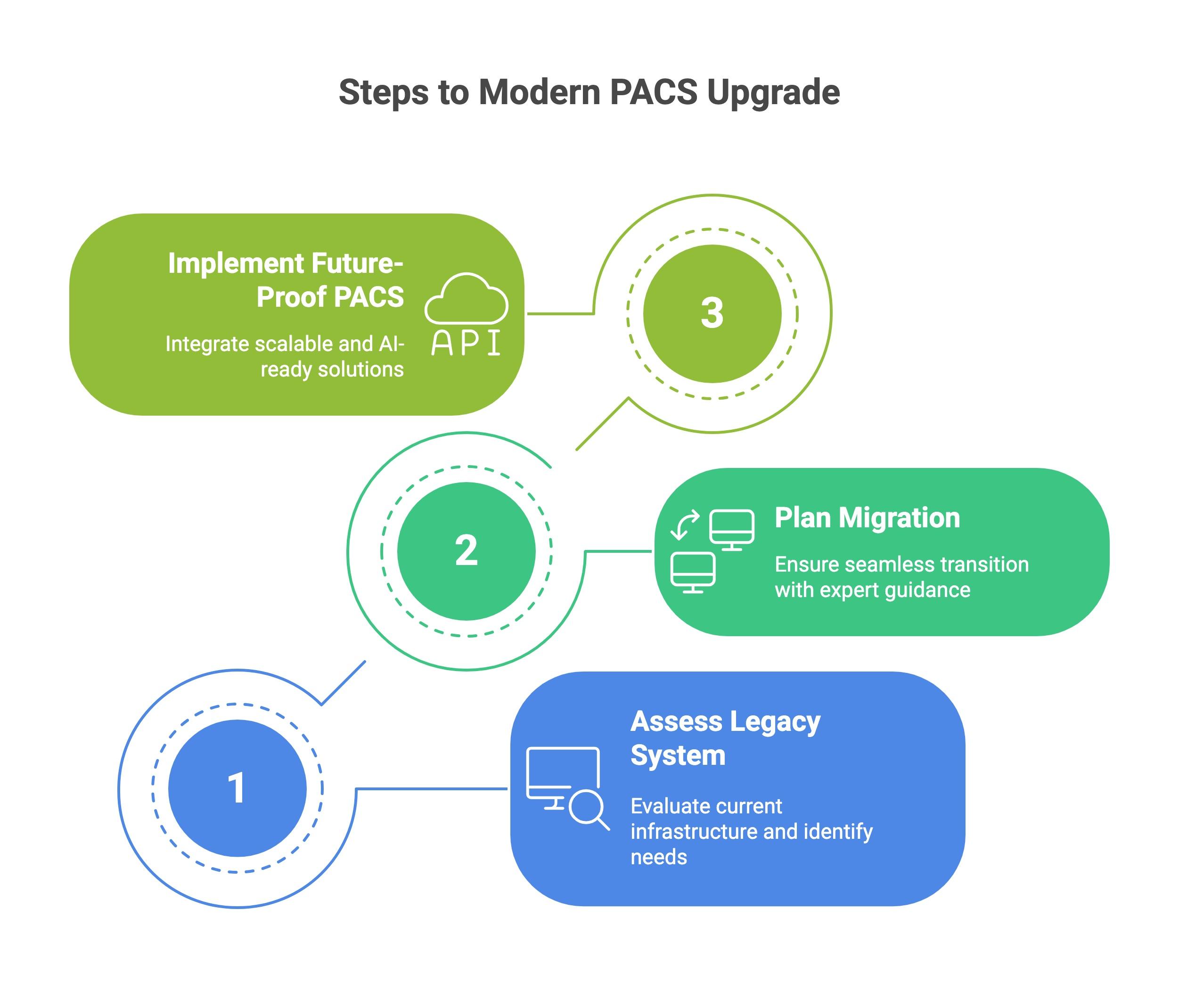
Step 1 – Assessing Your Current Healthcare Legacy System
Before diving into a PACS installation, conduct a thorough evaluation of your legacy infrastructure and identify the needs of your radiology department. Determine whether your data storage and retrieval approach is meeting the demands of your radiology information system. Pinpoint vulnerabilities in data security that may hinder compliance with healthcare information regulations.
Legacy systems make it challenging to integrate advanced solutions with your existing hospital information system. If your old legacy approach can’t adapt, it’s time to plan a more modern solution.
Step 2 – Planning a Smooth Migration
Data migration is a critical phase, especially when dealing with sensitive medical image archives. Proper planning ensures a seamless transition.
Work with an experienced PACS vendor like Radsource to ensure compliance with the DICOM standard. A robust migration protocol prevents data loss and respects patient privacy.
Careful scheduling, thorough testing, and parallel runs can help healthcare providers maintain operations as they shift from a legacy healthcare system to a modern PACS system.
Step 3 – Implementing a Scalable & Future-Proof PACS
A future-proof solution must adapt to evolving healthcare organization’s needs and emerging imaging technologies.
Look for flexible, vendor-neutral solutions that can easily integrate with other information technology platforms. This ensures continued efficiency even as your radiology department grows or new diagnostic modalities are introduced.
Artificial intelligence can expedite diagnostic interpretation and reduce errors. Implementing a PACS that supports AI algorithms ensures that your new system remains relevant in an ever-evolving healthcare environment.
Key Steps in Upgrading from Legacy PACS to Modern PACS
Overcoming Common Challenges in PACS Modernization
Data Migration Complexity
Data migration can be one of the biggest challenges of implementing PACS in a legacy software environment. Different systems store patient data differently. Adhering to the imaging and communications in medicine protocols ensures data from the legacy environment remains intact.
Training and Adoption in Healthcare Systems
User adoption often determines the success of a PACS upgrade. Without adequate training, even the best system can falter.
ProtonPACS offers user-friendly designs that help healthcare professionals quickly learn key features. This results in lower training costs and faster overall adoption.
Automated features free radiologists from repetitive tasks, letting them focus on diagnostic accuracy. This automation also reduces the burden on healthcare workers tasked with data entry and management.
Security and Compliance in Modern PACS
Healthcare information is strictly regulated. Security measures must be prioritized to protect patient data. Modern PACS solutions need to comply with global privacy requirements. By aligning with these standards, facilities ensure that their workflows and data remain secure.
The Future of PACS: Cloud, Hybrid and Interoperability
Cloud-Based and Hybrid PACS and Remote Access
As healthcare providers expand their services, the demand for remote access and teleradiology continues to grow. A hybrid model allows for on-premises stability while tapping into the scalability of the cloud. This configuration is ideal for healthcare facilities of varying sizes.
Interoperability & Vendor-Neutral PACS Solutions
Seamless data exchange is vital to enhancing engagement in their healthcare journey for patients and clinicians alike. A vendor-neutral approach allows the PACS to integrate with virtually any electronic health or radiology information system. This ensures data flows uninterrupted through the continuum of care.
Open-architecture PACS systems support multiple protocols and facilitate long-term scalability. This approach streamlines expansions, acquisitions, or the introduction of new imaging modalities.
Conclusion – The Time to Upgrade is Now
Postponing a new PACS installation only compounds existing problems like high maintenance costs, compliance risks, and slow performance. Over time, these issues will undermine patient care and staff satisfaction. When healthcare organizations modernize, patients experience faster, more accurate diagnostic results. Quick image retrieval and integrated workflows reduce wait times, enhancing overall patient care quality.
Radsource’s step-by-step strategy tackles challenges of implementing PACS head-on, minimizing disruptions during data migration and training. From large hospitals to specialized clinics, ProtonPACS adapts to meet each facility’s unique demands—fulfilling the promise of modern healthcare solutions. Radsource offers around-the-clock support to address issues promptly, ensuring minimal downtime and maximizing radiologist productivity.
Reach out to the Radsource team to evaluate your current legacy systems and develop a plan that aligns with your strategic goals. Whether you run a radiology department in a large hospital or a small clinic, Radsource tailors its PACS software to suit your needs. By partnering with an experienced pacs vendor, you’ll harness the full potential of modern PACS technology.
