
Today, many orthopedic practices face significant challenges in ensuring timely imaging. When these top obstacles are not addressed, it can lead to lost revenue, prolonged wait times for patients, and compromised patient experiences. The ripple effect includes a strain on staff, increased use of time and resources, and a disruption to patient management workflows, ultimately impacting operational efficiency and the overall revenue cycle.
By recognizing these issues early, providers can help orthopedic practices turn potential setbacks into opportunities for growth.
Radsource’s perspective is that solving imaging inefficiencies goes beyond merely upgrading hardware or software. It is a strategic endeavor aimed at elevating patient care, strengthening revenue cycle processes, and empowering staff to deliver higher quality of care in every orthopedic care scenario. Without these improvements, vital services like patient scheduling, eligibility verification, and billing can suffer delays or errors, potentially harming patient satisfaction and patient outcomes.
By focusing on both technological and procedural enhancements, Radsource’s perspective emphasizes that the path to reducing bottlenecks also involves holistic automation strategies. This integrated approach positions your practice to flourish, even as demands grow and complexities arise.
How Imaging Bottlenecks Hurt Your Orthopaedic Practice’s Efficiency and Revenue
Many of the day-to-day inefficiencies that plague an orthopedic practice stem from imaging delays that reduce the volume of patients seen and treated. If physicians cannot move patients per day efficiently through diagnostic evaluations, both operational efficiency and cash flow suffer. When images are slow to load or become misplaced, staff must dedicate additional effort to locating them, further raising their workload.
This not only undermines financial health but also risks missed reimbursement opportunities, since timely documentation is vital for maintaining accurate billing and ensuring claims get paid accurately and on time.
An increased staffing burden often occurs when radiology workflow disruptions force staff members to manually track referrals and re-check patient information. This manual data entry approach eats away at efficiency, as new staff members must learn multiple systems, and it can lead to denial risks if key details are overlooked.
Additionally, delayed surgeries—due to unavailable or outdated medical history—can undermine both procedural efficiency and surgical outcomes, preventing a practice from realizing revenue that would otherwise support its growth. These setbacks can also cause patients to take their orthopedic needs elsewhere, especially when repeated follow-up appointments become frustrating to schedule.
Reduced patient satisfaction and retention are natural consequence when inefficiencies dominate the imaging process. Without a deliberate plan to streamline patient flow from the initial visit to follow-up care, individuals may experience long wait times, frequent rescheduling, or incomplete data capture.
In an era where patient interactions are key to building trust, any disruption can hamper patient adoption of recommended treatments, limit your practice’s credibility, and ultimately translate into revenue leakage. When you fail to enhance workflow structures, you also risk losing new patients who expect speed, accuracy, and clear communication at every turn.
Common Imaging Bottlenecks in Orthopedic Workflows
One of the top culprits is outdated PACS technology, which can stall productivity through sluggish image retrieval and limited mobility. Poor PACS-EHR integration also contributes to an excessive administrative burden, as staff often must perform duplicate data entry across multiple platforms. These gaps in interoperability not only reduce time spent on direct patient care but also create extra room for errors that could trigger more billing processes down the line.
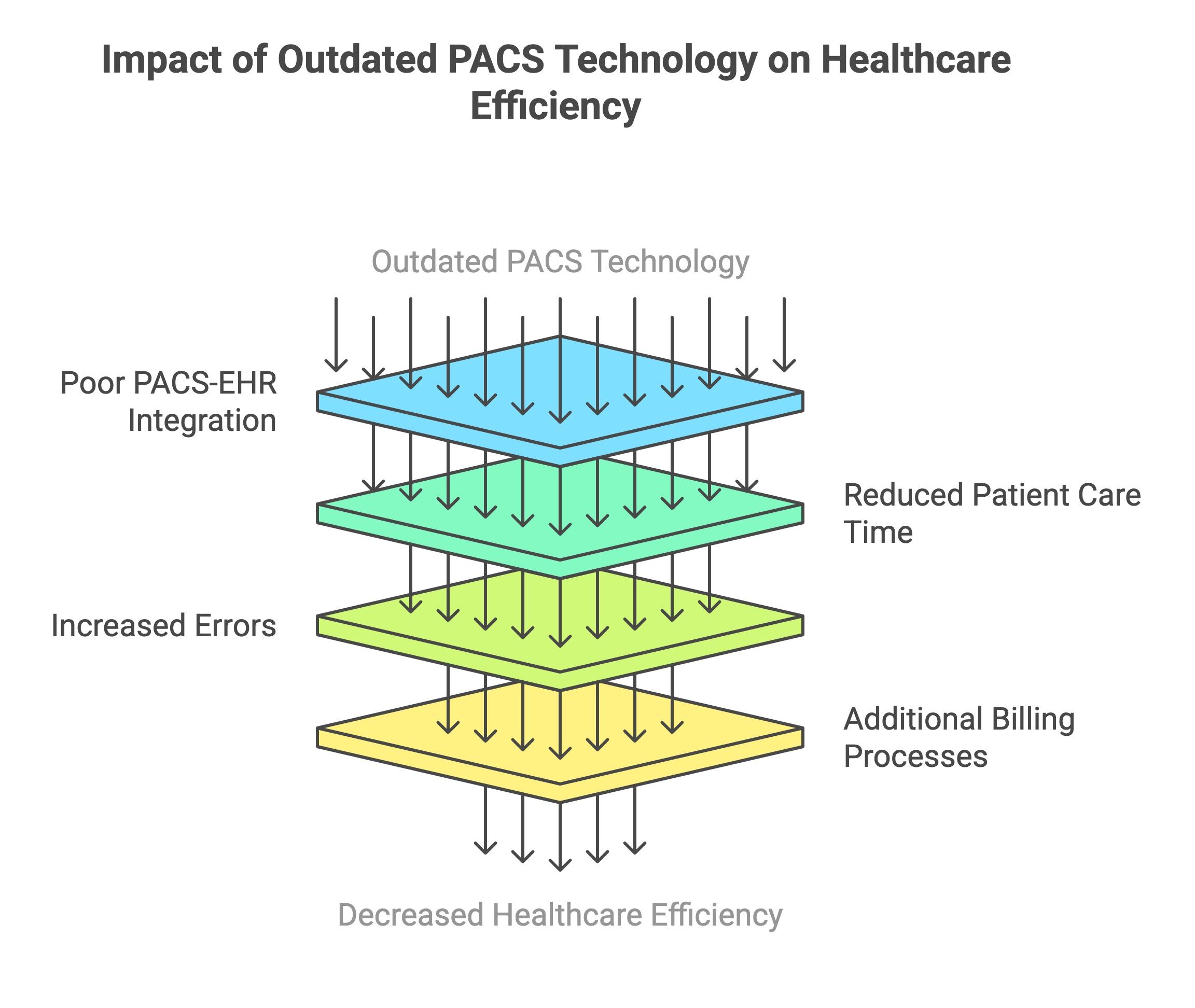
Impact of Outdated PACS Technology on Healthcare Efficiency
For orthopedics practices striving to maintain efficiency, such hurdles undermine the ability to meet evolving standards in healthcare operations.
Another frequent obstacle is limited access to MSK-sub-specialized radiology, especially after hours. Generalist readers may not detect subtle issues that impact accuracy and efficiency in diagnosing orthopedic patients, leading to subpar clinical decisions. Furthermore, infrastructure gaps like unreliable networks or insufficient storage can grind workflows to a halt. When these elements converge, your practice forfeits opportunities to automate tasks, improve patient care, and enhance operational efficiency, while missing out on reducing costs that stem from repeated downtime or re-scans.
Ultimately, preventing denial claims and optimizing revenue hinges on robust technology that can revolutionize how you deliver orthopedic services and ensure that everyone on your team shares the same, real-time data—so your practice gets paid accurately for the care you provide.
Radsource’s Approach to Workflow Optimization in Orthopedic Imaging
Radsource focuses on comprehensive workflow optimization, addressing the unique challenges in orthopedic imaging from multiple angles. By aligning cutting-edge technology with specialized support, Radsource aims to enhance efficiency, reduce complexities, and create a seamless collaboration between clinicians and radiologists.
Streamline Radiology with ProtonPACS
ProtonPACS leverages a hybrid cloud architecture to streamline radiology processes, enabling swift image access whether you are on-site or working remotely. This robust setup fosters greater efficiency by minimizing manual interventions and allowing for real-time collaboration. As a result, you can automate certain verification steps, reduce potential errors, and focus more on delivering top-tier orthopedic diagnostics.
Every click and manual step in a PACS can slow down the daily workload. ProtonPACS is specifically designed to eliminate these inefficiencies by centralizing image management and enabling a solution that can integrate with existing systems. Through this approach, staff can quickly view, annotate, and share images without jumping between disparate platforms, significantly enhancing daily throughput.
Optimize PACS-EHR Interoperability
Radsource ensures that ProtonPACS can directly integrate with your existing EHR or RIS platforms, allowing you to optimize how images and reports are shared.
This seamless exchange curtails the burden of manual data entry and relieves staff from juggling multiple logins. In turn, the system supports smoother patient scheduling, faster reporting turnaround, and ways to improve patient engagement—outcomes that collectively raise the bar for orthopedic practice management.
Enhance Access to Subspecialized MSK Radiologists
With Radsource, your orthopedic practice gains immediate access to musculoskeletal experts who focus exclusively on orthopedics. This specialized reading support ensures that complex cases receive the diagnostic precision they demand. As a result, you can enhance not only the speed of interpretation but also the overall quality of your surgical planning.
Additionally, guaranteed turnaround times reduce the need for repeated patient appointments, cutting down on redundant follow-up and giving your team more confidence in each diagnosis.
Features to Look for in a Modern PACS to Overcome Imaging Bottlenecks
In evaluating a next-generation PACS, there are key features to look for that will directly strengthen daily processes and align patient and staff objectives. Efficient image management for MRI, X-ray, and CT is non-negotiable, as is advanced viewing capability with high-resolution tools.
Orthopedic workflows benefit immensely from customizable functionalities that cater to the nuances of bone, joint, and soft-tissue imaging. Moreover, a robust platform should integrate with scheduling, reporting, and communication solutions, ensuring that patients experience a smooth transition from one step of care to the next.
For many orthopedic practices, a cloud-plus-on-site hybrid PACS architecture offers the best of both worlds, supporting scalable data storage while minimizing downtime. Automation features—such as built-in reporting templates—help streamline documentation and increase patient throughput.
Meanwhile, advanced analytics can track usage patterns and highlight potential issues before they escalate into claim rejections. Equally important is the system’s capacity to ensure that patients receive timely images and reports, preventing last-minute cancellations and safeguarding your cash flow.
Staff Optimization and Enhanced Patient Engagement through Better Imaging Systems
By improving imaging systems, you equip both staff and patient workflows with user-friendly tools that speed up patient appointments and reduce friction in daily tasks. Fewer manual processes and a more intuitive design allow new staff members to adapt quickly, thereby fostering efficiency and a more positive clinical environment.
From a clinical standpoint, faster turnaround times can enhance patient care by reducing the gap between diagnosis and treatment, while digital reports encourage transparent communication. Taken together, these strategies help orthopedic practices maintain a high standard of treatment and meet the rising expectations of modern healthcare operations.
Steps to Start Overcoming Imaging Bottlenecks in Your Orthopaedic Practice
Assessing your existing workflows is the first step in tackling inefficiencies. Conduct a thorough audit across all radiology touchpoints to identify where the system lags, whether it’s network speed, software compatibility, or staff training.
Reviewing your PACS speed, MSK focus, and EHR compatibility will also inform decisions about the best strategies to help you integrate solutions that serve real clinical needs. Additionally, evaluate how well your current process handles eligibility verification, especially if you aim to prevent revenue shortfalls due to overlooked coverage details. Ensuring eligibility is accurate from the start helps avoid coverage disputes down the line.
Next, examine the time it takes to generate reports and the specific reading sources for different imaging modalities. Transparent, well-documented steps in your workflow are vital for maintaining consistent progress, minimizing duplication, and boosting scheduling efficiency. By updating billing processes and adopting tools that align with your practice’s growth, you not only reduce administrative friction but also set the stage for optimizing revenue cycle activities.
Ultimately, careful follow-up procedures will boost patient confidence and keep you on track to deliver the highest standards of clinical treatment.
Conclusion: Optimize Imaging. Streamline Care. Maximize Reimbursement.
Eliminating bottlenecks in imaging is more than a mere technical upgrade—it is a holistic approach to strengthening both your clinical and financial performance.
By embracing a modern PACS solution backed by MSK experts, you transform diagnostic accuracy and expedite treatment timelines, leading to better surgical planning and fewer administrative hiccups. Efficient technology, combined with a focus on well-being across your entire care team, forms the backbone of any thriving orthopedic practice.
If you are ready to push past old limitations, contact Radsource today for a personalized consultation or demo. Streamline care, save time, boost efficiency and patient satisfaction, and build a foundation for growth in a dynamic healthcare environment.
