
Exchanging medical information swiftly and securely often feels like navigating an obstacle course. Whether you’re a radiologist trying to access patient information from multiple sources or an IT professional concerned about compliance pitfalls, health information exchange can feel cumbersome and complicated.
When patient care hinges on timely clinical information, delays in imaging or fragmented electronic exchange of health information can undermine diagnosis and treatment. These breakdowns not only impede continuity of care but also place a huge strain on healthcare information systems, leading to wasted time, administrative overhead, and, in some cases, compromised patient outcomes.
Fortunately, modern Picture Archiving and Communication Systems (PACS) offer practical tools to help healthcare providers and organizations overcome these common obstacles. By leveraging a solution like ProtonPACS from Radsource, you can streamline data exchange, secure your medical information, and ensure better support the information needs of your care practitioners. In this post, we’ll explore how PACS technology addresses pressing health information exchange challenges—and why the right platform is essential for success.
Let’s dive into how PACS and ProtonPACS, in particular, can help you achieve better access to patient information, strengthen security protocols, and enhance overall patient care.
Key Takeaways
- Interoperability is Key
Seamless integration among EHR systems, PACS, and other health information technology solutions can significantly reduce data silos, eliminate workflow inefficiencies, and enhance continuity of care.
- Secure and Compliant Image Sharing
Maintaining security and compliance during the exchange of patient information is critical. A robust PACS solution, built with cloud-based encryption and audit trails, can protect your organization from the risks associated with health information exchange.
- Scalability and Speed Matter
A hybrid-cloud architecture can revolutionize data exchange by speeding up image access, supporting multiple locations, and offering reliable backup and disaster recovery options—all crucial for delivering real-time patient care.
Introduction: The Critical Role of PACS in Health Information Exchange
Picture Archiving and Communication Systems serve as more than just digital filing cabinets; they’re a cornerstone in enabling health information exchange among diverse medical settings. Hospitals, imaging centers, and specialty practices rely on these solutions to ensure healthcare providers have instant access to comprehensive patient information. The continuity of care depends on how quickly radiologists and clinicians can view, interpret, and share medical images within and beyond their own information system.
From Radsource’s perspective, ProtonPACS is uniquely positioned to solve the most pressing health information exchange system challenges. By supporting multiple standards—like HL7 and DICOM—ProtonPACS helps healthcare organizations streamline their imaging workflows, reduce the volume of information that goes missing during manual processes, and ensure an experienced level of available information at all times.
Without effective health information exchange, clinicians face significant hurdles in accessing medical images and corresponding reports. Imagine an orthopedic surgeon who needs real-time imaging for immediate surgical planning. If the system is fragmented, the surgeon may not have the clinical information necessary to make timely decisions, affecting patient care and overall health status.
By integrating seamlessly with an electronic health record (EHR) system, a cloud-based or hybrid PACS facilitates rapid access to patient images, fosters real-time collaboration, and ensures that critical data does not reside in isolated information silos.
ProtonPACS incorporates advanced security features, a user-friendly interface, and scalable architecture—all vital for the successful use of health information exchange. This positions it as a powerful tool for ensuring secure exchange of patient data, including personal health records, across multiple locations.
The Challenges of Health Information Exchange (HIE) in Medical Imaging
1. Lack of Interoperability in HIE Systems
A major reason many organizations struggle with health information exchange is the patchwork of EHRs, Radiology Information Systems (RIS), and outdated PACS technologies that can’t communicate effectively. Various information management structures create disjointed workflows, making it harder to exchange health information between providers.
These systems can lack compatibility at both the software and data levels. For instance, a local hospital’s EHR might not send the correct data fields to a third-party imaging center, forcing manual entry and risking errors in patient information and medical record details.
The exchange network for large imaging files can be cumbersome, especially when different regional health information exchange systems rely on incompatible infrastructures. This has led to experiences with different regional health solutions that remain inconsistent and prone to errors.
ProtonPACS supports HL7, DICOM, and other key standards—ensuring data exchange remains consistent and reliable. This eases the burden on providers who must share sensitive information across diverse platforms.
2. Workflow Inefficiencies & Data Silos in Radiology
Disorganized workflows and siloed data can hamper patient care and undermine a provider’s ability to handle a high volume of imaging studies.
Disparate systems stall the smooth flow of clinical information, making it tough to maintain a comprehensive view of a patient’s health. This fragmentation also limits the potential for query-based exchange, where a provider can immediately pull the specific patient data they need.
In a scenario where you have to navigate multiple logins or physically import CDs, the entire process of diagnosing and treating patients slows down. Such inefficiencies also risk the exchange of data being incomplete or outdated by the time it arrives.
By serving as the backbone of a health information network, ProtonPACS offers real-time imaging access across platforms, drastically reducing turnaround times. This approach supports population health goals by allowing multiple specialists to collaborate more rapidly on urgent cases.
3. Security & Compliance Concerns in Health Information Exchange
With data breaches and ransomware attacks on the rise, health information exchange involves significant security risks.
In the United States, the health insurance portability and accountability regulations mandate specific guidelines for safeguarding patient data. Failing to comply can be costly, both in fines and reputation damage.
ProtonPACS employs advanced encryption standards to protect electronic health information during transmission and storage. Detailed audit trails help organizations meet HIPAA and GDPR requirements while also aligning with guidelines from the Department of Health. By delivering advanced security features, ProtonPACS supports the ongoing health research that depends on reliable data.
4. Accessibility & Speed Issues in Image Sharing
Healthcare providers need immediate, reliable image access—especially in specialties like emergency medicine or orthopedics, where clinical decisions are time-sensitive.
Legacy PACS solutions often rely on dated infrastructures, making the exchange of information burdensome. When seconds count—such as in information exchange usage in emergency situations—slow images can directly impact life-saving interventions.
Older systems are rarely designed for modern telehealth contexts or for specialists working across multiple hospitals. This is a significant barrier to the use of health information exchange and can also hamper organizations seeking to participate in an information exchange cooperative agreement program.
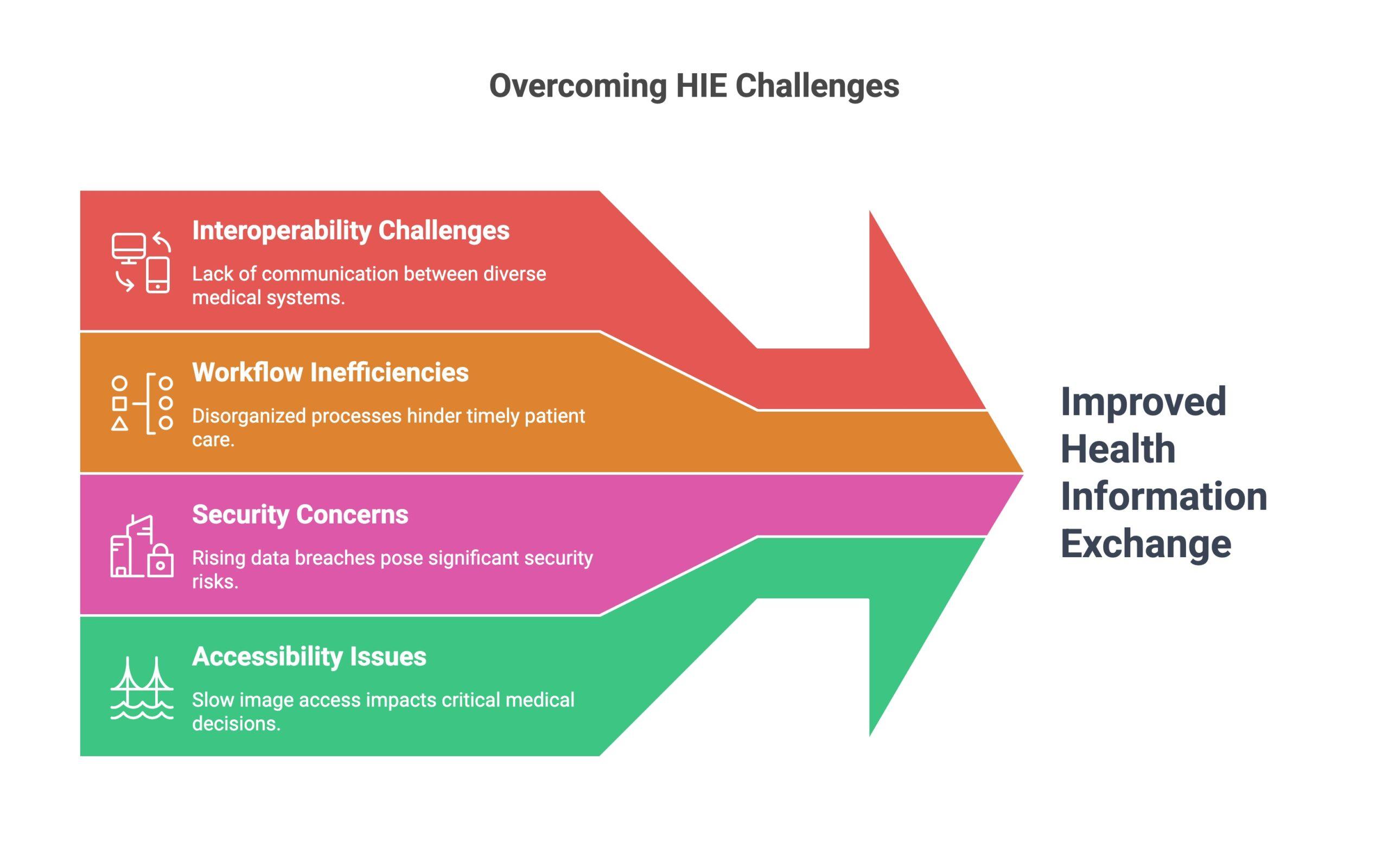
The Challenges of Health Information Exchange (HIE) in Medical Imaging
How ProtonPACS Helps Overcome HIE Challenges
1. Seamless PACS-HIE Integration with Existing EHR & RIS Systems
ProtonPACS is purpose-built for interoperability, making it an excellent choice for providers aiming to strengthen health information exchange.
These protocols are essential for ensuring a smooth data exchange across disparate systems, including an ehr system and other health information technology components. By championing these standards, ProtonPACS simplifies the process of linking patient records to imaging data, aligning with initiatives from the national coordinator for health to promote seamless data sharing.
2. Enhancing Continuity of Care Through Streamlined Imaging Workflows
ProtonPACS aims to deliver immediate, secure image distribution, bolstering continuity of care at every stage.
In orthopedics and oncology, fast use of health information can be the difference between quick treatment decisions and delayed care. ProtonPACS harnesses the power of clinical data exchange and clinical information exchange to offer near-instant viewing of diagnostic images—an essential factor in delivering timely patient care.
By streamlining the exchange of data and employing modern health information systems, ProtonPACS helps unify the health record. This consolidated view of a patient’s health enables clinicians to share consistent findings and coordinate treatments across specialties, which is particularly beneficial in public health scenarios where multiple providers might be involved.
3. Strengthening Security & Compliance in Health Information Exchange
Data protection is paramount in health information exchange among providers, and ProtonPACS is engineered to address the complexities of regulatory compliance.
This approach ensures only authorized staff can view or modify patient health information, mitigating the risks associated with health information exchange. ProtonPACS is designed to safeguard patient data whether it’s on-premise or in the cloud, in line with the health information technology for economic and clinical health regulations, often referred to collectively as HITECH.
ProtonPACS logs every instance of information during transmission and storage, ensuring that your organization can monitor information exchange participation and use. These logs also help illustrate the information shared if you ever need to show regulators a trail of how medical information was accessed and exchanged.
4. Cloud-Based Scalability for Faster, More Reliable Image Sharing
One of ProtonPACS’ standout features is its flexible architecture, which addresses the exchange of patient data swiftly while offering robust backup options.
A dual deployment model ensures that if on-site servers are compromised or overloaded, the system can tap into cloud resources. This design can help meet the requirements of regional health information networks while simplifying the complexities of multi-site imaging.
Instead of spending millions on new servers or data centers, smaller facilities can leverage ProtonPACS’ pay-per-study model. This approach aligns with the exchange health information goals of the department of health and the nationwide health information framework, reducing financial barriers to modernizing infrastructure. It also supports community health initiatives by promoting access to patient information across broader networks.
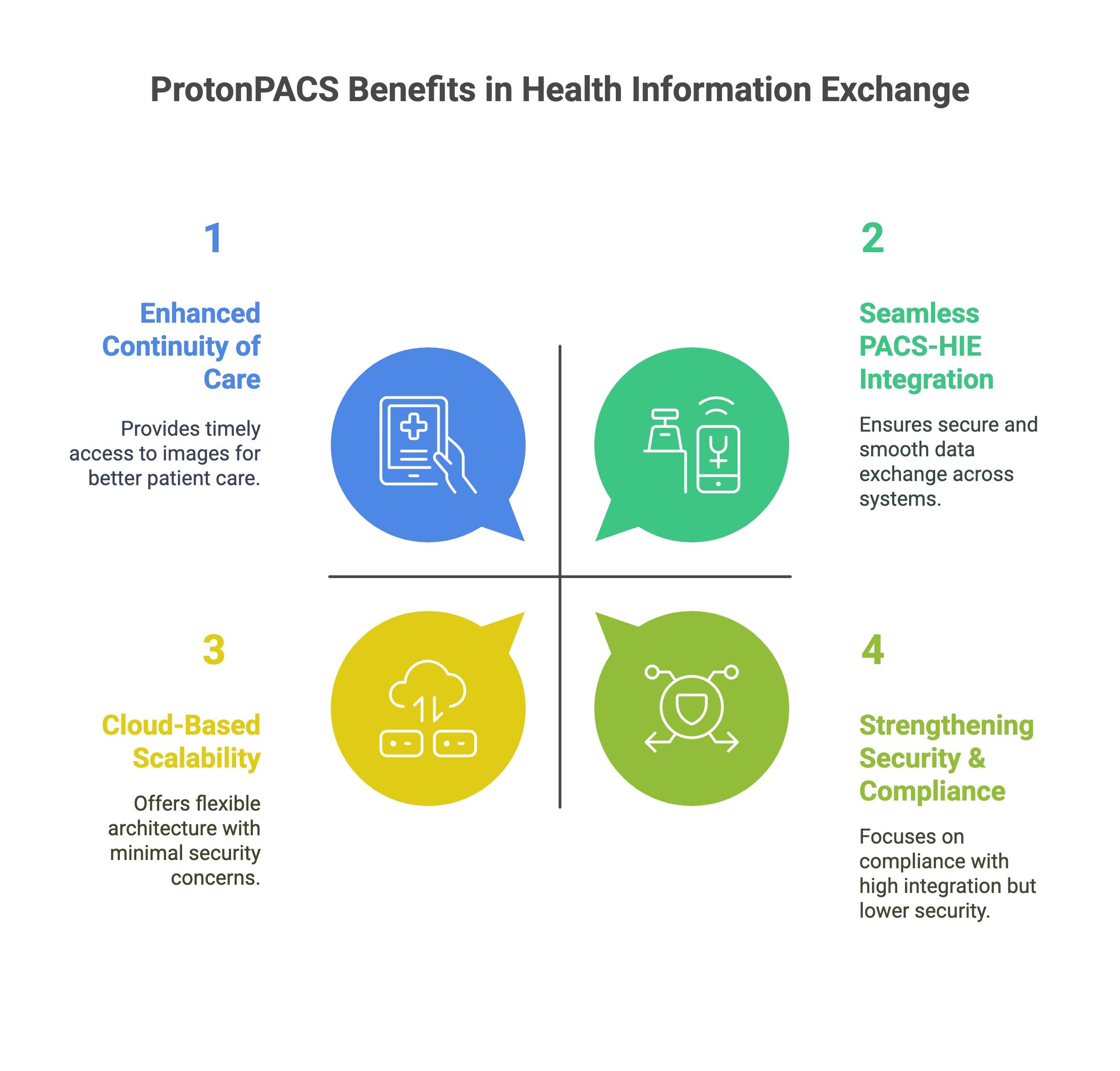
How ProtonPACS Helps Overcome HIE Challenges
Conclusion: Choosing the Right PACS for HIE Success
Issues with health information exchange—like interoperability, security, workflow inefficiencies, and speed—are significantly alleviated by a system engineered for integration. ProtonPACS simplifies the exchange of health information by providing a stable platform designed to handle large imaging files, maintain compliance, and improve the health information exchange usage in day-to-day operations.
Whether you’re aiming for better personal health record management or looking to engage with regional health information exchange systems, the right PACS helps unify data flow. ProtonPACS empowers you to harness a health information network that fosters real collaboration among radiologists, specialists, and primary care providers—resulting in a fuller view of a patient’s health.
Ready to streamline your health care information exchange processes and deliver more efficient patient care? Discover how ProtonPACS can help your organization achieve effective exchange among providers, reduce costs, and enable patient information sharing without barriers. Contact Radsource today to see how you can implement a system that’s truly related to health information exchange success—because every patient deserves care backed by the most accurate, real-time data possible.
