
If you’re still using older technology in your imaging department, you might believe that “staying put” is safer than making a change. However, using outdated technology comes with a range of hidden costs that businesses don’t always consider when they decide to “hold” onto old tech. Outdated tech is costing your business in ways you may never have anticipated—everything from high maintenance costs and security vulnerabilities to loss of productivity.
Many businesses rely on everyday solutions for patient care, yet fail to take a close look at how older or outdated systems drag down efficiency. While it’s natural to worry about the cost that comes with upgrading your technology, delaying that investment could be putting you at risk for major costs down the road. Developers stop supporting software and hardware that is no longer supported, leaving your organization exposed to data breaches and other cyber threats. Ultimately, this outdated technology is costing more than you think, both financially and in patient care.
The Silent Costs of Outdated Imaging Software (That Are Adding Up Fast)
When healthcare organizations decide to stick with outdated software, they often overlook how technology fails to meet modern standards. This technology becomes a drain on your business, driving up maintenance costs and creating inefficiencies that stall growth. If you’re unsure whether it’s time to upgrade, discover the hidden costs that businesses don’t always consider. Below, we break down why maintaining legacy systems can be such a risk.
Slow Workflows = Lost Revenue
Delays in accessing medical images lead to lower daily read volumes, longer patient turnaround, and physician dissatisfaction. Whenever staff members deal with slow apps to load images or run into a problem with system crashes, the organization loses precious time and faces the potential loss of customers.
Outdated PACS systems introduce unnecessary steps—extra clicks, repeated logins, and manual workarounds. High-maintenance tasks pile up, and radiologists become even more frustrated. Over time, these workflow bottlenecks cause a significant loss in productivity.
Security Risks = Legal and Financial Exposure
Legacy systems simply weren’t built for today’s cyber challenges. They lack the latest defensive measures, making them high maintenance to patch or update.
With 2025 deadlines approaching for stricter data standards and end-of-life support for many platforms, holding onto outdated tech increases exposure to HIPAA violations. Including data breaches in your risk calculus is vital because these incidents charge you accordingly, not just in fines but in reputational damage, too.
Maintenance and Support = IT Drain
Constant patching, system crashes, and integration failures increase operational overhead and maintenance costs. Your IT team, or a dedicated IT services firm, must devote resources to keeping outdated systems limping along.
As a result, your IT staff becomes reactive instead of strategic, losing the chance to adapt to evolving technologies or focus on new tech initiatives that offer lower maintenance costs and higher returns.
Scalability Problems = Missed Growth Opportunities
When technology upgrades are delayed, you limit your facility’s ability to add a new imaging center, support remote radiologists, or integrate third-party solutions. Modern systems also come with flexible architectures, but using outdated tech means you’re stuck with rigid, non-cloud infrastructure that can’t expand quickly.
5 Ways Outdated Technology Is Holding Back Your Imaging Department
There are countless ways outdated technology stalls progress, but let’s highlight five key issues. If any of these resonate, it’s time to take steps to avoid deeper financial and clinical impacts.
Physician Satisfaction Drops:
Doctors expect seamless, fast access to imaging studies and reports. If they’re dealing with slow performance or confusion, they may look elsewhere. This loss of support from your medical staff can directly impact patient outcomes and the overall reputation of your facility.
Radiologists Burn Out Faster:
Outdated technology costs mental energy. Issues are your employees constantly dealing with workarounds and repeated errors, leading to chronic fatigue. In time, you face a loss of employees who seek a more modern environment to practice their expertise.
Clinical Delays Become Routine:
Slow interfaces and frequent downtime cause backups in patient care. Over time, these delays become normalized, creating a cycle of reduced efficiency and potential declines in patient satisfaction.
Modality Compatibility Issues:
Older technology may not integrate well with new modalities or advanced diagnostic tools. This mismatch leads to more third-party plugins and complex workflows. Ultimately, you risk falling behind competitors who embrace modern technology.
You’re Paying More Than You Think:
When software is no longer supported, you’re forced to spend more on stopgap fixes. That high-maintenance approach can be more expensive than a strategic upgrade in the long run. Essentially, your outdated tech is costing you hidden fees and inefficiencies.
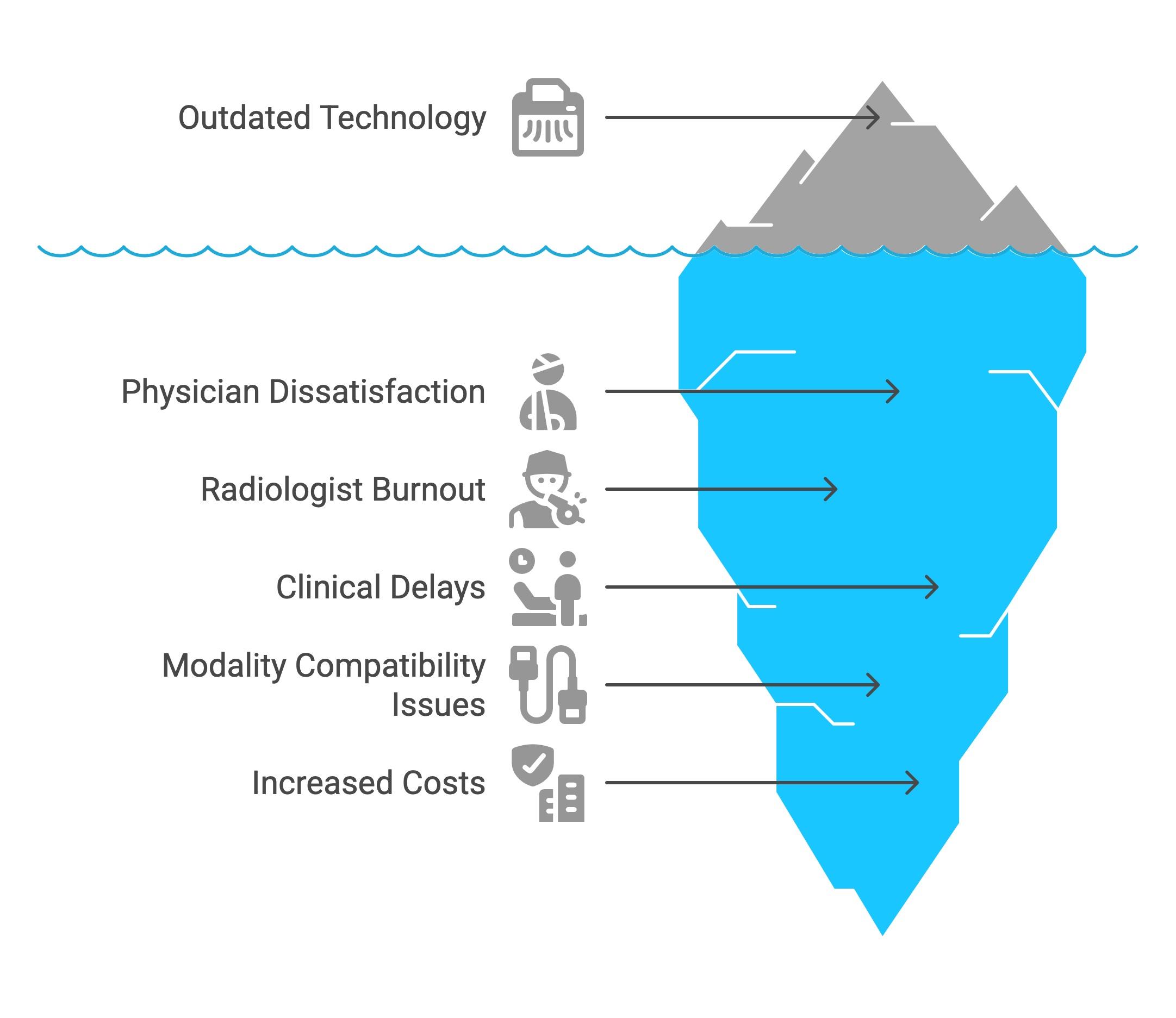
5 Ways Outdated Technology Is Holding Back Your Imaging Department
Objectively Evaluating the True Cost of Outdated Imaging Systems
It’s easy to underestimate the costs associated with these losses when technology becomes dated. Many businesses assume that because the system “still runs,” all is fine. However, maintaining legacy systems can create major costs down the road. Below, we break down the core areas where outdated software can be a drain.
- Operational Costs: Downtime, service calls, lost productivity
- Reputational Risk: Referring physicians notice delays
- Compliance Gaps: Security holes from unsupported PACS systems (especially by 2025)
- Opportunity Cost: You can’t expand, scale, or optimize because your foundation is broken
When you discover the hidden costs of outdated technology, you’ll realize the pace of technological change has outstripped these older solutions. When developers stop supporting a platform, you lose crucial security updates. That can lead to data breaches and a loss of security that puts patients and providers at risk. It’s time to take proactive steps to ensure a smooth transition to modern systems—before you run into a problem you can’t fix.
Why ProtonPACS Is the Modern Alternative to Legacy Systems
Investing in new equipment or replacing outdated infrastructure might seem daunting, but upgrading can save you from endless headaches. ProtonPACS offers technology upgrades designed for the needs of growing imaging centers and hospitals, helping you adapt to evolving demands. Below are the key benefits that come with upgrading your technology to ProtonPACS.
- No More Bloated Contracts: Pay-per-study pricing without upfront capital expense
- Scales With You: From imaging centers to full hospital networks, ProtonPACS grows as you do, reducing the need for multiple “piecemeal” solutions
- Fewer Clicks, Faster Reports: Radiologists work faster with clean UX and smart automation
- Proven Radiology Expertise: Backed by board-certified, fellowship-trained radiologists with clinical insight
- Speed and Stability: Studies load instantly across sites and devices
- Cloud-Hybrid Flexibility: Scale across modalities, locations, and specialties without buying more hardware or software
- Integrated PACS + RIS: No more disconnected workflows or duplicate data entry
- Security by Design: Built to withstand modern cybersecurity threats—not just patched to keep pace
By choosing ProtonPACS, you get lower maintenance costs, fewer bottlenecks, and a solution that helps your business get back up to speed quickly. In turn, your customers gain complete confidence in your business because you’re providing reliable, modern systems that support patient care without disruptions.
Conclusion: The Cost of Doing Nothing Is the Most Expensive Option
If you’re ready to stop overpaying for outdated imaging technology, Radsource can help bring your business back on track. We offer a thorough assessment of your systems and work closely to ensure a smooth transition, whether you’re looking for a managed service provider or a new tech partner. Don’t let outdated technology costs hold you back; it’s time to embrace modern systems so you can confidently move your business as you head toward future success. Contact us today and decide to upgrade for better stability, higher productivity, and complete confidence in your business.
Remember: when you’re still using old technology, you risk more than high maintenance costs—you risk your reputation and revenue streams. It’s time to move forward. By replacing outdated solutions with ProtonPACS, you can reduce the hidden costs of outdated technology, avoid data breaches, and maintain compliance. Upgrading can save you the frustration of dealing with outdated software and help you unlock genuine improvements in workflow efficiency and patient care. Let us help you take that first step to ensure your imaging department is set up for success.
