
Nine Steps to Selecting a PACS Vendor
Selecting the right Picture Archiving and Communication System (PACS) vendor is critical to the long-term success of your healthcare organization’s imaging operations. With various PACS system vendors offering different combinations of software, hardware, support, and data storage, it’s important to follow a structured approach. Below are nine essential steps to help you choose among top PACS vendors and make a well-informed decision.
1. Identify Key Stakeholders
The first step in selecting a PACS vendor is identifying all the stakeholders involved in the decision-making process. These individuals should have a direct impact or be affected by the PACS system, and their input is crucial for ensuring a successful selection and implementation. Key stakeholders typically include:
- C-suite Executives: Focused on cost, return on investment (ROI), and strategic alignment.
- Physician Users: Need user-friendly software that improves patient care.
- IT Resources: Responsible for technical integration, data security, and maintenance.
- PACS Administrators: Oversee system management and ensure its smooth operation.
- Imaging Technologists: End users who need efficient tools to manage daily tasks.
By gathering input from all of these groups, you ensure that your choice reflects a holistic view of your organization’s needs. Those needs will differ from organization to organization; healthcare PACS imaging varies heavily, depending on everything from trained users to general equipment.
2. Assess Your Current PACS Architecture
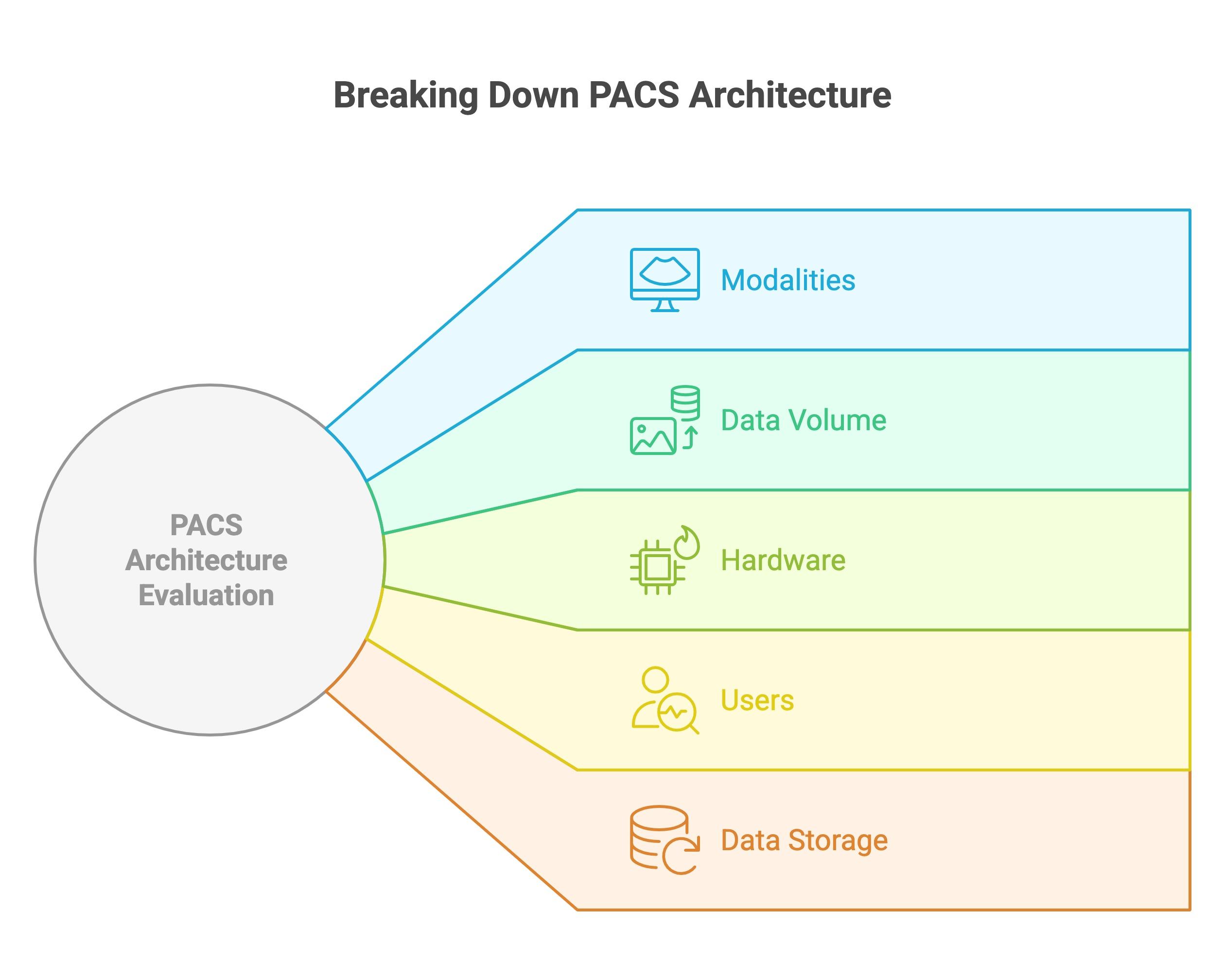
Before moving forward, it’s important to evaluate your current PACS architecture. This includes detailing:
- Modalities: Identify the imaging modalities your PACS supports, such as MRI, CT, X-ray, etc.
- Data Volume: Determine the volume of images produced by each modality and its impact on storage requirements.
- Hardware: Evaluate the age and condition of your current PACS hardware, as outdated systems may need replacing.
- Users: Assess the number of daily users, including radiologists, administrators, and other healthcare professionals.
- Data Storage: Review your current data storage methods, including on-premise and cloud options, and disaster recovery protocols.
This analysis will provide a clear understanding of where your current system stands, helping to define the requirements for your new PACS solution.
3. Define Future PACS Performance Expectations
Once you’ve assessed your existing system, it’s time to consider how you’d like your PACS System system to perform in the future. Consider these critical factors:
- Features and Functionality: What capabilities will improve your workflow and productivity?
- Architecture Type: Do you prefer an on-premise, cloud-based, or hybrid solution?
- Scalability: How well can the system grow with your practice or hospital?
- Integration: Can the PACS vendor seamlessly integrate with existing Electronic Health Record (EHR) systems and other clinical information systems?
Clearly defining your future needs will help narrow down PACS system vendors that align with your organization’s long-term goals.
4. Identify Key Challenges to Overcome
Understanding the pain points your new PACS system should address is essential. Common challenges that organizations face with their current PACS systems include:
- Improving Productivity: Does the current system slow down image retrieval or reporting times?
- Reducing Costs: Can you lower transcription or storage costs with a more efficient solution?
- Supporting Business Growth: What new functionalities are required to handle a growing volume of studies?
- Enhancing Data Security: How can the vendor help protect sensitive patient data?
- Alleviating Internal Burdens: Would outsourced support ease the pressure on your internal IT team?
Ensure that the PACS vendor you select can resolve these issues effectively.
5. Establish a Realistic Timeline To Implement A New PACS
Implementing a PACS system can be a complex and lengthy process, so it’s important to lay out a realistic timeline. For an imaging center, the selection and implementation process might take around 2 months. For larger hospital systems, the timeline can be significantly longer. The key milestones typically include:
- Distribute the Request for Proposal (RFP): This marks the start of the vendor selection process.
- Evaluate Vendor Responses: Give ample time for reviewing proposals and scheduling demos.
- Select Final Vendor and Sign Contracts: This final stage should allow for detailed contract negotiations to ensure all your needs are met.
Allow enough time in your timeline for unforeseen issues or delays.
6. Develop a Comprehensive RFP
Your Request for Proposal (RFP) should be detailed and comprehensive, covering every aspect of your PACS needs. However, avoid getting bogged down in technical questions. Instead, ask vendors to focus on how they can help resolve your challenges. Include these questions in the RFP:
- How will you improve our workflow?
- How can your solution enhance patient care?
- What support options are available to relieve our internal team?
This approach will enable you to assess the value each vendor brings beyond just technical specs.
7. Distribute the RFP and Gather Referrals
Once the RFP is finalized, it’s time to distribute it to your selected vendors. When selecting potential PACS vendors, don’t just focus on the top PACS vendors list. It may be helpful to solicit referrals from industry peers or look into lesser-known but equally capable PACS system vendors that may offer more cost-effective or specialized solutions. Peer referrals can provide invaluable insights into real-world performance and support levels.
8. Evaluate RFP Responses Against Key Criteria
As you begin receiving responses, it can be difficult to compare proposals directly. To make the process more manageable, evaluate vendors across these six critical areas:
- Solution Architecture: Does the vendor offer the on-premise, cloud, or hybrid solution you need?
- Software Functionality: Consider ease of use, speed, and advanced toolsets.
- Total Cost of Ownership (TCO): Estimate the 5-year TCO, including hardware, software, support, and indirect costs.
- Implementation and Integration: Does the vendor support seamless integration with your existing systems?
- Data Storage and Security: Are their off-site storage solutions secure and compliant with data protection laws?
- Support Options: Evaluate the level of support offered, including 24/7 availability, network maintenance, and service agreements.
Using this evaluation method allows for an equitable comparison of vendors based on your organization’s priorities.

9. Select the Best PACS Vendor and Negotiate the Contract
After evaluating the proposals, it’s time to select the best PACS vendor and negotiate the contract. Pay close attention to:
- Pricing Structures: Ensure that the costs align with your budget and offer long-term value for the size and needs of the healthcare organization.
- Service Level Agreements (SLA): Make sure the vendor commits to specific uptime, support, and performance standards.
- Flexibility and Scalability: Ensure the contract includes provisions for future scalability as your practice grows.
By carefully negotiating the contract, you can secure a deal that provides optimal performance, support, and value for your organization.
Ready to Choose Your PACS Vendor?
Selecting the right PACS vendor is a crucial decision that impacts your healthcare facility’s efficiency, data management, and patient care quality. By following these nine steps, you’ll be well-positioned to make an informed choice among top PACS vendors, ensuring you select a solution that meets your needs now and in the future.
Need help finding the perfect PACS system? Contact us today to connect with industry experts who can guide you through the vendor selection process and help you find a tailored PACS solution for your organization!
