
Understanding Teleradiology
Teleradiology, the remote transmission of radiological images for the purposes of analysis and diagnosis, has transformed the healthcare landscape. It enables clinics to send medical images from one location to another for expert evaluation, allowing radiologists to interpret and consult from a distance.
This technology has made healthcare more accessible and efficient, especially in rural and underserved areas where specialized radiology services may be limited.
Historical Development of Teleradiology
Teleradiology began as a niche technology in the 1980s, primarily serving as a tool for connecting radiologists with healthcare facilities lacking specialized staff.
However, with advancements in digital imaging and internet speed, it has evolved significantly, becoming a fundamental part of modern healthcare. Today, teleradiology services are used globally to support a range of healthcare settings, from small clinics to large hospitals, offering around-the-clock radiology services.
Key Benefits of Teleradiology – A Primer For Assessment
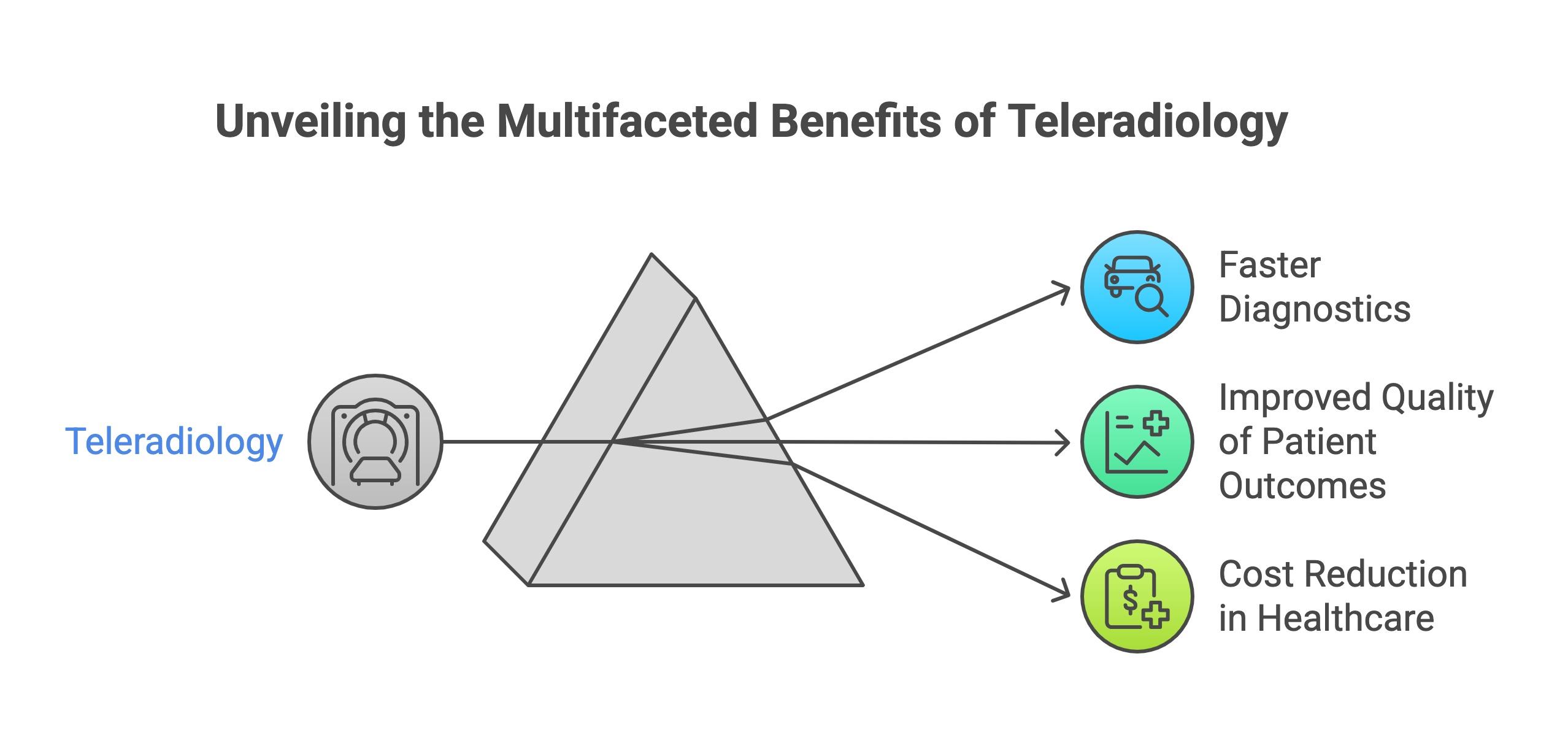
Faster Diagnostics
Teleradiology allows for quicker access to diagnostic information, reducing the time it takes for patients to receive necessary treatment. Since radiologists can interpret images remotely, clinics no longer have to rely solely on in-house staff or wait for the availability of a local radiologist. This rapid turnaround is essential in emergency cases where time is critical for positive patient outcomes.
Improved Quality of Patient Outcomes
With timely and accurate diagnostics, patient outcomes can improve significantly. Teleradiology provides access to a wider pool of radiology specialists, enhancing the quality of care. Patients benefit from receiving diagnoses and treatment plans faster, leading to better recovery times and overall health.
Cost Reduction in Healthcare
Teleradiology can also help clinics reduce costs by minimizing the need for on-site radiologists, particularly during off-hours or in remote locations. Instead, clinics can leverage teleradiology services, which often operate around the clock and on an as-needed basis. This approach reduces staffing costs while providing high-quality radiology services.
Specific Advantages for Clinics Utilizing Teleradiology Partners
Enhancing Consultations
Teleradiology enables clinics to facilitate remote consultations with radiology specialists. This capability is especially useful for complex cases requiring a second opinion, allowing healthcare providers to consult with experts regardless of geographic location.
Teleradiology enables consultation and collaboration beyond what was previously capable. MRI Web Clinics, for example, provide access to teleradiology expertise and contribute to more accurate diagnoses and better-informed treatment decisions.
Increasing Patient Satisfaction
With faster service and access to specialized radiologists, clinics can enhance patient satisfaction. The convenience of remote radiology services means that patients spend less time waiting for diagnostic results, allowing clinics to provide more timely care. This responsiveness can improve the overall patient experience and foster trust in the healthcare facility.
Addressing Staffing Challenges
Teleradiology offers a solution for clinics facing staffing shortages. Many clinics, especially those in rural areas, struggle to attract and retain specialized radiologists. Through teleradiology, these facilities can access high-quality radiology services without needing a full-time, on-site radiologist, addressing a common staffing challenge.
Evaluating Potential Teleradiology Partners
When selecting a teleradiology provider, clinics should consider several factors to ensure quality and compatibility with their needs.
Accuracy and Reputation
A partner’s accuracy and reputation are paramount. Clinics should seek providers with a proven track record of precise, reliable diagnostic work. Researching the partner’s credentials, certifications, and experience, as well as seeking referrals from other healthcare facilities, can provide valuable insight into their reliability.
Communication Capabilities
Effective communication is essential in healthcare, particularly in teleradiology, where timely and accurate information sharing is critical. Clinics should assess a teleradiology service provider’s communication systems to ensure smooth collaboration. Reliable communication protocols, along with easy access to radiologists for consultations, can enhance the quality of care provided.
Further Criteria for Assessing Clinical Requirements
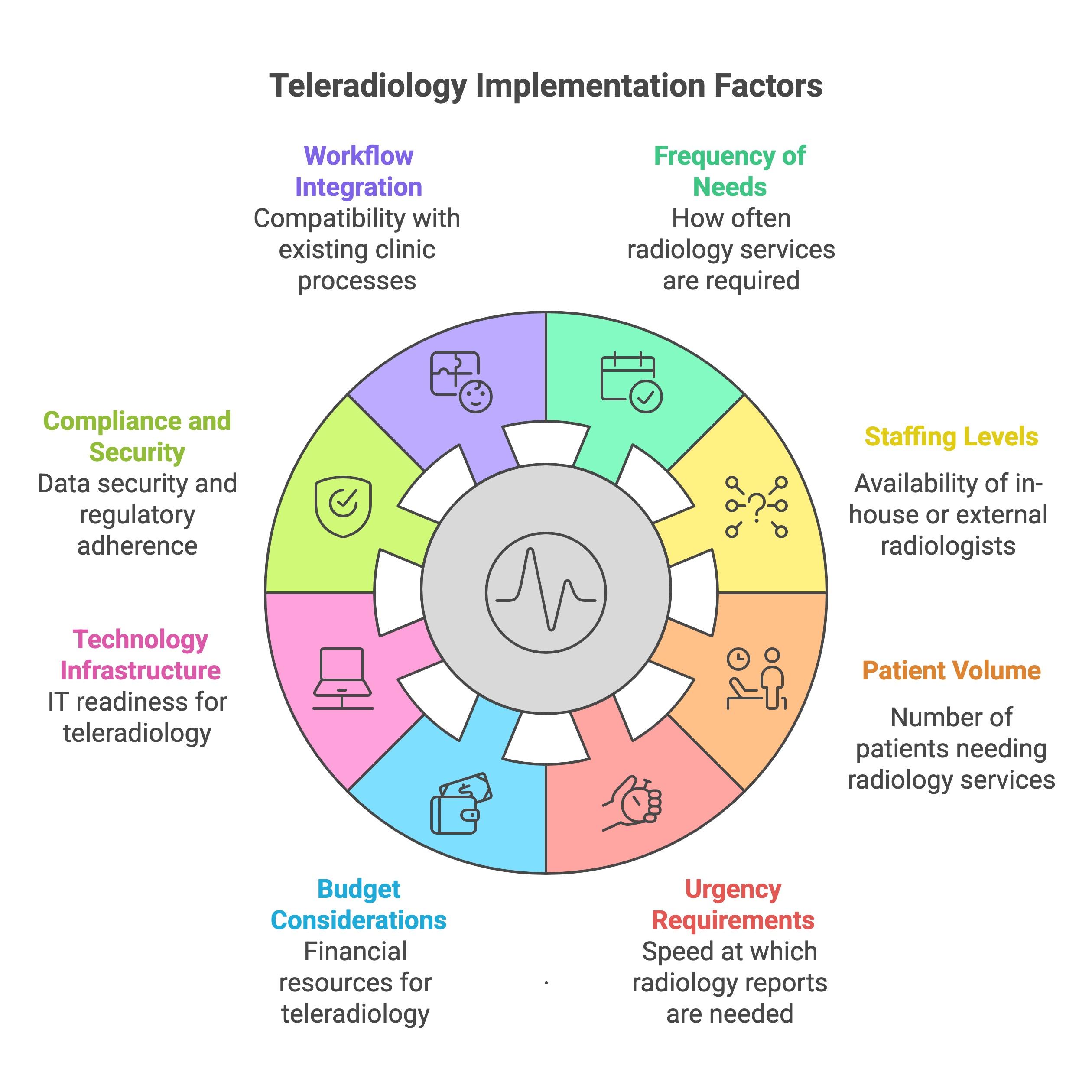
- Frequency of Radiology Needs – How often the clinic requires radiology services (e.g., daily, weekly).
- Current Staffing Levels – Whether the clinic has in-house radiologists or relies on external support.
- Patient Volume – The number of patients that require radiology services.
- Urgency Requirements – How quickly the clinic needs radiology reports (emergency, same-day, etc.).
- Budget Considerations – The budget available for implementing teleradiology services.
- Existing Technology Infrastructure – Whether the clinic has the necessary IT infrastructure to support teleradiology.
- Compliance and Security Needs – Requirements for data security and compliance, such as HIPAA.
- Integration with Current Workflows – How compatible teleradiology solutions are with the clinic’s existing workflows.
The Role of Radiology Information Systems (RIS)
A Radiology Information System (RIS) is crucial for organizing and managing medical imaging data. When evaluating potential teleradiology partners, clinics should ensure that the provider’s RIS is robust and user-friendly, offering features like image tracking, patient data management, and report generation. An efficient RIS will streamline workflows and improve overall productivity.
Assessing Integration with Existing Workflows
For a seamless experience, teleradiology services should integrate smoothly with the clinic’s existing workflows and electronic health record (EHR) systems. This integration minimizes disruptions and ensures that patient data remains consistent and easily accessible. Clinics should look for teleradiology providers with compatibility with the clinic’s current technology stack to facilitate smooth operations.
Emerging Trends in Teleradiology
Telemedicine Integration
The integration of teleradiology with broader telemedicine services is an emerging trend that enhances patient care. Combining these technologies allows clinics to offer comprehensive remote healthcare solutions, from initial consultations to diagnostic imaging and follow-up care. This holistic approach streamlines the patient journey, making healthcare more efficient and accessible.
AI and Machine Learning Advancements
Artificial intelligence (AI) and machine learning are revolutionizing teleradiology. These technologies can assist radiologists by automating tasks, such as image analysis, allowing for faster and more accurate diagnoses. AI-driven tools can identify patterns and anomalies in images, potentially improving diagnostic precision and reducing human error.
Challenges Facing Teleradiology Today
Regulatory and Compliance Issues
Teleradiology is subject to a range of regulations, varying by country and region. Compliance with these regulations, including licensing and certification requirements, is essential to ensure that services meet legal and quality standards. Clinics must stay informed about these regulations and ensure their teleradiology partners adhere to them.
Data Privacy and Security Concerns
Teleradiology involves the transmission of sensitive patient data, making data privacy and security critical concerns. Clinics must ensure that their chosen providers employ robust security measures, such as encryption, to protect patient information. Compliance with regulations like HIPAA (Health Insurance Portability and Accountability Act) is essential to safeguard patient data and maintain trust.
Solutions for Effective Implementation
Training and Support
For teleradiology to be successful, staff must receive proper training on the technology and workflows involved. Clinics should partner with providers that offer comprehensive training and ongoing support. This support is essential to help staff adapt to the new system and address any challenges that may arise.
Continuous Monitoring and Evaluation
Once implemented, teleradiology services should undergo continuous monitoring and evaluation to ensure they meet the clinic’s needs. Regular assessments of the service’s performance, accuracy, and integration with workflows can help clinics identify areas for improvement.
Additional training or regular web clinics can also enhance the value of teleradiology services provided and allow clinics to optimize teleradiology services and maintain high standards of patient care.
Conclusion
Teleradiology represents a significant advancement in healthcare, offering clinics the ability to provide faster, more accurate diagnostics and improve patient outcomes. By carefully evaluating potential teleradiology partners and ensuring effective implementation, clinics can harness the benefits of this technology to enhance their services.
Radsource offers end-to-end cloud-based PACS solutions that streamline your workflows, enhance data security, and improve access to critical patient information. With our expertise in PACS and teleradiology services, you can ensure that your imaging data is always available, secure, and optimized for seamless integration across systems.
Ready to experience a more efficient, reliable imaging solution?
Contact Radsource today to explore how we can tailor our cloud-based PACS solutions to meet your organization’s unique needs.
