
History of PACS
Transitioning from film-based processes to digital solutions in healthcare can feel daunting. Many facilities struggle with outdated, manual workflows for viewing and storing medical image files, which can lead to inefficiencies and potential patient care delays.
Imagine the frustration when radiology teams must wait hours—or even days—to access diagnostic images. Inconsistent storage, time-consuming searches, and lost film duplicates create stress for healthcare professionals and jeopardize timely diagnoses. These issues have lingered for years, overshadowing the full potential of advanced imaging technology.
Fortunately, the history of PACS reveals a transformative journey toward a comprehensive picture-archiving and communication system. This blog post will explore how early systems evolved into the robust digital frameworks we see today.
By understanding this path, you’ll gain insights into how modern PACS solutions (hereafter referred to as “PACS” to highlight system components) can streamline workflows and enhance patient outcomes. Let’s dive into the story behind the development of these essential healthcare tools and discover practical steps to overcome common challenges.
Key Takeaways
- Key takeaway #1: Early PACS innovations revolutionized the practice of radiology, leading to faster retrieval of digital image files and more efficient patient care.
- Key takeaway #2: Universal standards like DICOM—or digital imaging and communications—and strong PACS design principles propelled the transition from film to digital.
- Key takeaway #3: Modern systems, such as Radsource’s ProtonPACS, continue to refine PACS technology, offering seamless integration with hospital information systems and radiology information system platforms.
Introduction
The concept of a picture archiving and communication system has revolutionized the practice of radiology, shifting the focus from analog film to efficient, electronic medical record-friendly storage. As technology advanced, PACS solutions tackled challenges in information communication technologies, ultimately forming the foundation for modern healthcare workflows.
Initially, early PACS faced skepticism, but over time, they have proven integral to helping clinicians handle images from various medical imaging devices—like magnetic resonance imaging or CT machines.
The evolution of PACS continues as hospitals implement large-scale strategies to manage medical imaging data. This shift has allowed a more streamlined environment where multiple PACS applications can coexist in a single PACS environment. Whether we’re talking about a full PACS configuration in a health system or an incremental approach, the development of PACS underscores a clear goal: to enhance the quality and accessibility of healthcare data.
Even more exciting, solutions like Radsource’s ProtonPACS connect the dots between earlier innovations and current best practices, ensuring that PACS ultimately empowers clinicians and patients.
The Origins of PACS in Radiology
Early Concepts and Milestones
The PACS concept was introduced in the late 1970s and early 1980s as a design blueprint for capturing, storing, and distributing digital imaging network files. This concept laid the groundwork for a PACS infrastructure that would redefine the department of radiology operations.
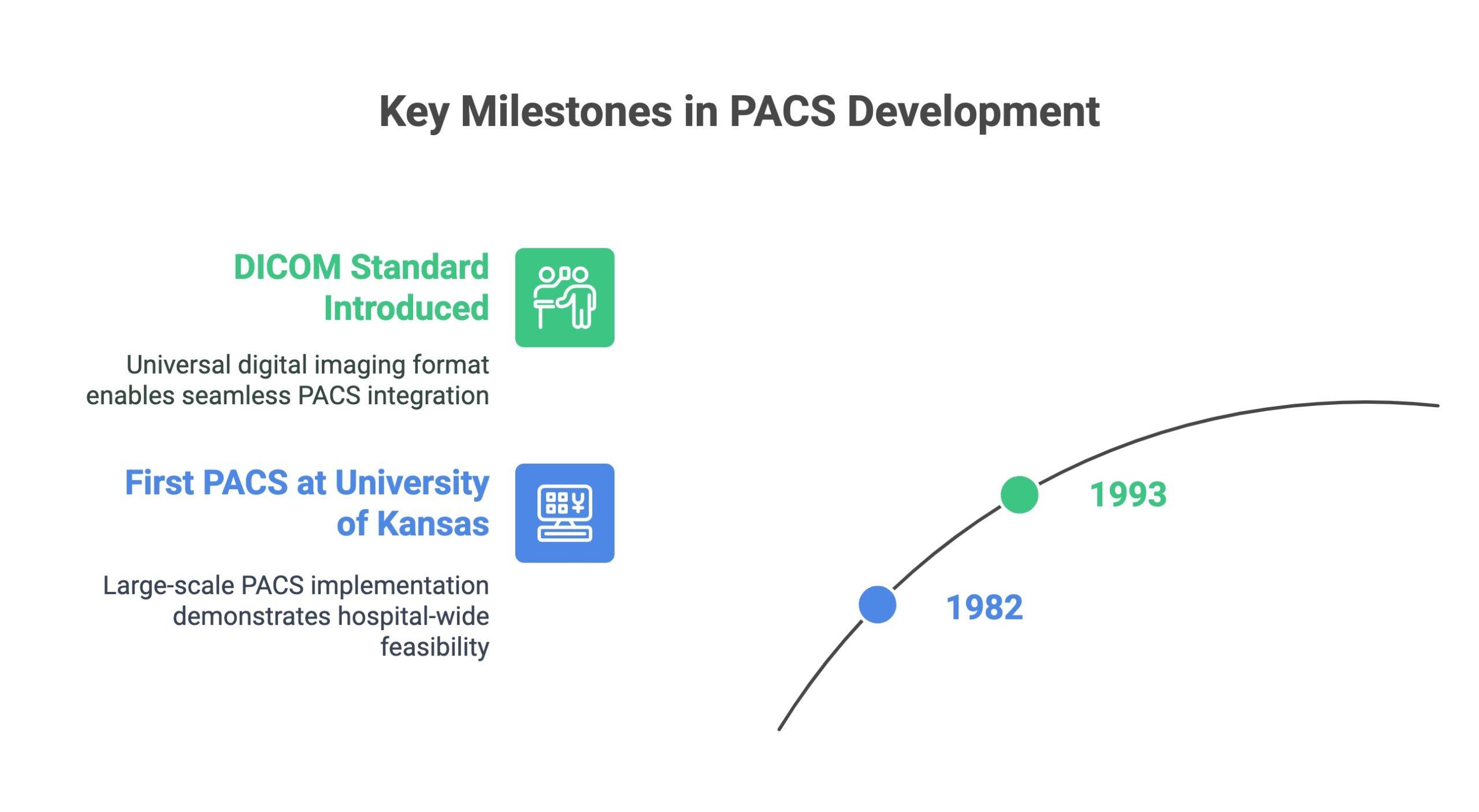
In 1982, the first PACS at the University of Kansas showcased a large-scale PACS approach, proving that a hospital-wide transition was possible. Visionaries like Dr. Judith Prewitt, Dr. Samuel Dwyer III, and Dr. Andre Duerinckx contributed to these early breakthroughs, ensuring pacs in the US gained credibility.
It was during this period that pacs development in the USA took form. Researchers noted the impact of PACS on speeding up diagnostic radiology, significantly reducing turnaround times for reading medical image sets. This propelled further interest in PACS implementation, spurring an influx of new technologies to handle images from various medical imaging instruments. By aligning with the history of radiology, PACS development seamlessly merged evolving hardware with imaging informatics, facilitating more precise diagnoses.
The Role of PACS Conferences
Conferences dedicated to PACS and imaging informatics became crucial forums for healthcare professionals to discuss breakthroughs. The “International Conference on PACS,” for instance, traced a timeline from the early 1980s to the present, addressing issues such as PACS network optimization, PACS components upgrades, and advanced PACS workflow solutions. These gatherings also spurred collaboration between clinical experts, software developers, and vendors.
Notably, the first spie medical imaging sessions and events, such as computer-assisted radiology and surgery, introduced new ideas about digital image communication, fostering synergy across information systems in healthcare. Over time, these PACS conference discussions became integrated into the Journal of Radiology and the Society for Imaging Informatics archives, shaping standards that continue to steer PACS development.
Transitioning Radiology: Analog to Digital
Challenges in Early Adoption
Shifting from analog film to digital image platforms was no simple feat. Early PACS implementation faced difficulties in data transmission—networks often lacked the bandwidth to handle PACS image storage and transfer tasks. Standardization was another hurdle; the 1980s witnessed a scarcity of universal guidelines to connect hospital information solutions with PACS systems. Consequently, many PACS installation efforts faltered due to fragmented communication and limited PACS administrator expertise.
Moreover, the lack of cohesive information communication technologies complicated the exchange of PACS image data among departments like the intensive care unit, surgery, and imaging centers. Vendors struggled to establish consistent formats for picture communication. Despite these roadblocks, the drive to refine PACS development persisted as early adopters recognized the promise of more efficient management system operations.
The Advent of DICOM Standards
A decisive turning point arrived in 1993 when the American College of Radiology (ACR) and the National Electrical Manufacturers Association (NEMA) collaborated to create DICOM (imaging and communications in medicine). This digital imaging and communications format served as a universal format for PACS images, standardizing the format for PACS image storage across multiple devices. Institutions could finally easily handle images from various medical equipment, ensuring pacs worked seamlessly in a hospital-wide environment.
With DICOM in place, the development of PACS accelerated. It provided a consistent structure for the order for PACS distribution, ensuring PACS clients in different departments could read and store data harmoniously. This collaboration laid the groundwork for how PACS provides solutions that integrate neatly with hospital information system tools and radiology information system platforms, making the entire health system more efficient.
The Origins of PACS in Radiology
Key Applications of PACS in Modern Radiology
Transforming Radiology Workflow
As PACS technology gained traction, integrating PACS architecture with the hospital and radiology information systems dramatically improved diagnostic radiology operations. Suddenly, clinicians could swiftly retrieve digital imaging networks and picture files, accelerating the continuum of care. This synergy also encouraged real-time consultation between specialists, lowering the margin for human error.
Additionally, the ability to share data with off-site locations revolutionized teleradiology. Clinicians in remote or underserved regions could access advanced imaging informatics in medicine, reviewing diagnostic images from faraway hospital branches. The overarching benefit? A more cohesive PACS environment that minimized duplication, streamlined communication, and promoted accurate diagnoses—ultimately reinforcing the significance of PACS systems in modern healthcare.
Expanding Beyond Radiology
The success of PACS in the US quickly spread to multiple specialties. From cardiology to oncology and from pathology to dermatology, clinical teams recognized that PACS includes streamlined image management for diverse imaging modalities. Advanced PACS applications even paved the way for specialized solutions tailored to a specific department’s workflow.
This evolution gave rise to vendor-neutral archives (VNAs)—an extension of PACS architecture designed for broader data storage needs. With VNAs, information systems throughout a hospital or clinic could share data beyond radiology. As these capabilities grew, more healthcare providers saw the benefits of a robust management system for archiving, ensuring medical imaging technology was easily accessible anywhere, anytime.
Global Impact: Pioneering PACS Implementations
Case Studies from Around the World
The mid-1980s saw pacs in Europe blossom, with St. Mary’s Hospital in London striving to be the first attempt at a filmless radiology department in 1985. Across the Channel, Utrecht University in the Netherlands spearheaded the Dutch PACS project, achieving seamless PACS network integration with their university medical center and hospital information framework. These endeavors broke new ground in pacs design, demonstrating that pacs development could flourish globally.
Hammersmith Hospital, also in London, made waves by going entirely filmless by 1996, showing that comprehensive PACS implementation could reduce overhead and speed up PACS workflow. These successes highlight how PACS provides a blueprint for digitizing images in diagnostic radiology and beyond. Each case underscores the personalized view of the history of how PACS infrastructure built a bridge to modern imaging practices.
Collaborative Efforts
Government agencies, industry leaders, and hospitals joined forces to drive PACS development. Early vendor collaborations—like those with Siemens, Philips, and other pioneers—bolstered research and ushered in incremental improvements in PACS design. Through the review of PACS presentations and articles published in the Journal of Radiology, guidelines were formed to steer the consistent implementation of PACS strategies across various facilities.
This global collaboration also aligned with initiatives such as integrating the healthcare enterprise and promoting a unified data sharing and interoperability approach. As more countries recognized the impact of PACS on efficiency, investments in information communication technologies escalated, encouraging a proliferation of PACS environment solutions.
PACS Today and the Future
Advances in PACS Technology
Modern PAC solutions (again, “PAC”) support enterprise imaging efforts, merging medical imaging informatics with powerful computational tools. High-speed networks, robust security protocols, and advanced analytics are now built into PACS architecture. In many facilities, electronic medical record systems integrate seamlessly with these solutions, ensuring that physicians across departments—from general wards to the intensive care unit—benefit from real-time access to patient data.
Moreover, artificial intelligence (AI) is increasingly intertwined with PACS infrastructure. Machine-learning algorithms help clinicians sort through large volumes of medical imaging data, flagging anomalies faster than ever. This innovation marks a new chapter in the history of the PACS, bridging the gap between raw data and actionable insights.
Future Trends in PACS Applications
Going forward, technologies like cloud storage, 5G connectivity, and AI-driven diagnostics will shape how PACS clients interact with medical databases. Facilities of all sizes can now adopt cost-effective, secure, and remotely accessible solutions. This aligns with expansions in the society for imaging informatics, fostering collaborative advancement in PACS and imaging informatics.
Additionally, PACS was first perceived as a purely radiology-centric tool. However, its scope has broadened. As imaging networks and picture archiving solutions move into mainstream settings, even smaller clinics stand to benefit from PACS environment stability. With these developments, the potential for bridging gaps in care—especially in underserved areas—becomes ever more attainable.
Spotlight on Radsource’s ProtonPACS
Innovative PACS Solutions
Radsource’s ProtonPACS represents a next-generation PAC offering advanced PACS architecture for healthcare providers seeking robust, user-friendly systems. Building upon lessons from the history of the PACS and the covers the PACS development narrative, ProtonPACS integrates easily with electronic medical record software and existing information systems, ensuring minimal disruption to established workflows.
In addition, ProtonPACS employs secure cloud-based PACS server setups, offering a dependable management system that supports PACS image storage and transfer. By combining best-in-class security with intuitive features, ProtonPACS delivers an agile solution, perfect for institutions looking to modernize their medical imaging 2000 and 2004 setups without heavy on-site hardware.
Why Choose ProtonPACS?
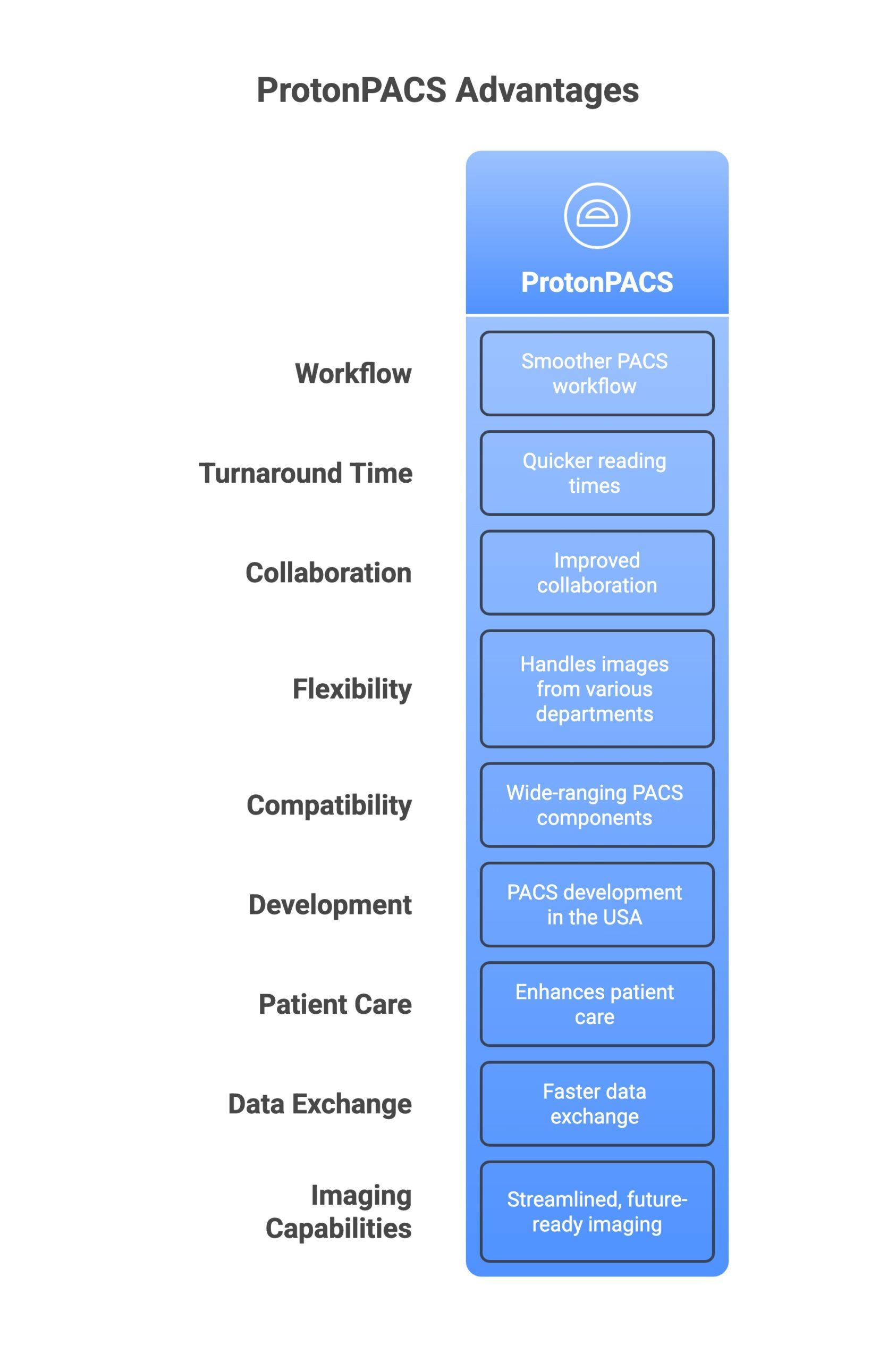
Hospitals and clinics that utilize Radsource’s ProtonPACS frequently report smoother PACS workflow, quicker turnaround times for reading diagnostic images, and improved collaboration. Its flexibility allows it to effortlessly handle images from various medical departments, offering wide-ranging compatibility with diverse PACS components related to medical imaging.
Furthermore, ProtonPACS underscores PACS development in the USA, standing as an example of how PACS evolution can align with real-world needs. Numerous healthcare professionals credit ProtonPACS with enhancing patient care by facilitating faster data exchange from the PACS diagnostic station in a remote facility to the central PACS administrator domain. As a result, ProtonPACS has become synonymous with streamlined, future-ready imaging capabilities that maintain alignment with imaging informatics standards.
Why Choose ProtonPACS
Conclusion
The history of the PACS is a testament to how vision, collaboration, and perseverance have revolutionized the practice of radiology. From the early PACS experiments to the cutting-edge tools we see today, PACS in Europe and the USA share a legacy of continual innovation. With AI integrations, cloud-based architecture, and robust interoperability, PACS systems evolve to meet the demands of modern healthcare.
Ready to embrace the future of medical imaging? Discover how Radsource’s ProtonPACS can align with your facility’s goals and improve clinical efficiency. Contact Resource to learn more about customizing a solution that empowers your team enhances patient care and sets a new standard for PACS implementation success.
