
In today’s clinical radiology world, a streamlined and dependable PACS system is the backbone of patient care. Yet for many healthcare professionals, system issues feel like a daily headache rather than a helpful tool.
Slow loading times, a rising IT burden, and mounting frustrations across the radiology department can lead to serious fallout. Radiologists should be interpreting imaging findings, not wrestling with complicated software or hunting through a picture archiving and communication system for missing studies.
Fortunately, modern PACS options—like Radsource’s ProtonPACS—can help eliminate these complaints at the source, improving diagnosis and treatment outcomes and restoring focus on what truly matters: the patient.
PACS Should Power Radiology – Not Disrupt It
When a PACS software slows down, the entire radiology department feels the ripple effect. Radiologists, technologists, and referring physicians encounter sluggish exam retrieval or broken workflows. This frustration isn’t just about convenience; it can contribute to error in radiology findings and delayed diagnoses in radiology, jeopardizing patient care.
Since a PACS is much more than an imaging archive, any slowdown can create bottlenecks in diagnostic radiology. Our experience at Radsource shows that a well-architected system for seamless management, like ProtonPACS, boosts both speed and reliability, so healthcare professionals can focus on clinical information instead of system troubleshooting. By viewing PACS as a core operational system, rather than a static picture archiving repository, radiology leaders can catalyze a change in performance.
ProtonPACS, for instance, is designed to unify imaging workflows across multiple modalities, ensuring that every radiologist avoids wasted steps or repeated processes. That means fewer types of errors, less time scanning for mislabeled images, and better synergy with the existing PACS architecture.
How PACS Complaints Impact Radiology Teams and Patient Care
Slow Image Loading Increases Turnaround Times
Delays in accessing imaging tests, such as an X-ray or CT scan, can drag out the radiology report creation process. If a radiologist is forced to wait on a spinning wheel while the system fetches the necessary images, the entire diagnostic imaging pipeline is affected.
Over time, this adds up to significantly longer turnaround times, which can hamper diagnosis and treatment plans.
Workflow Bottlenecks Disrupt Radiology Modalities
When your imaging department relies on multiple modalities—like MRI, x-ray, or CT—bottlenecks in PACS data retrieval can cascade across the radiology workflow. Technologists may struggle to upload studies promptly, radiology residents might lose time searching for the right imaging findings, and the overall efficiency of the department of radiology suffers.
PACS Troubleshooting Diverts IT and Admin Resources
Each glitch in a PACS system demands attention from administrators or the IT team. Instead of focusing on bigger projects—like integrating the healthcare enterprise or refining diagnostic workflows—staff waste hours on patchwork fixes.
Rising system issues can also create friction with radiology specialists or referring physicians who expect seamless access to imaging studies.
Burnout, Delays, and Staff Morale Drop
Persistent system slowdowns and an increased error rate lead to frustration across the radiology practice. Radiologists, who are trained in clinical radiology, end up devoting mental energy to IT tasks, upping the chance of diagnostic error.
Over time, morale and job satisfaction dip, fueling burnout. This is especially detrimental in an era where healthcare systems are already stretched thin.
What Radiology Leaders Expect From a Modern PACS System
Seamless RIS and PACS Integration
An effective PACS and RIS environment ensures each diagnostic study is connected to the correct medical record. Leaders in radiology know the importance of bridging the gap between the radiology information system (RIS) and the PACS to minimize repeated data entry and reduce clinical radiology practice redundancies.
By aligning risk and PACS, teams can streamline everything from scheduling to final reporting.
Fast Access to Medical Images (DICOM-compliant)
In an ideal world, radiologists can retrieve a medical image—whether it’s a recent CT scan or an older x-ray—instantly. DICOM, which stands for digital imaging and communications, or imaging and communications in medicine, is the worldwide standard ensuring these files are stored and transmitted consistently. A modern PACS respects DICOM conventions for quick, accurate retrieval.
Intuitive, Customizable Workflows for Radiologists
Each radiologist approaches diagnostic imaging differently, especially in high-volume settings like a busy medical center. A modern PACS must allow easy customization, so each workstation user can build an interface that supports their reading style, from image layout preferences to advanced viewing tools. This fosters a synergy that can truly improve radiology processes.
Reliable Uptime—No Surprise Downtime
Radiology leaders require stable performance from their PACS vendors, expecting consistent access to imaging storage for all staff—even radiology residents. Whether an institution is a small clinic or an enterprise PACS environment, unplanned outages can create chaos. With the right solution, your existing PACS can evolve into a robust system with minimal disruptions.
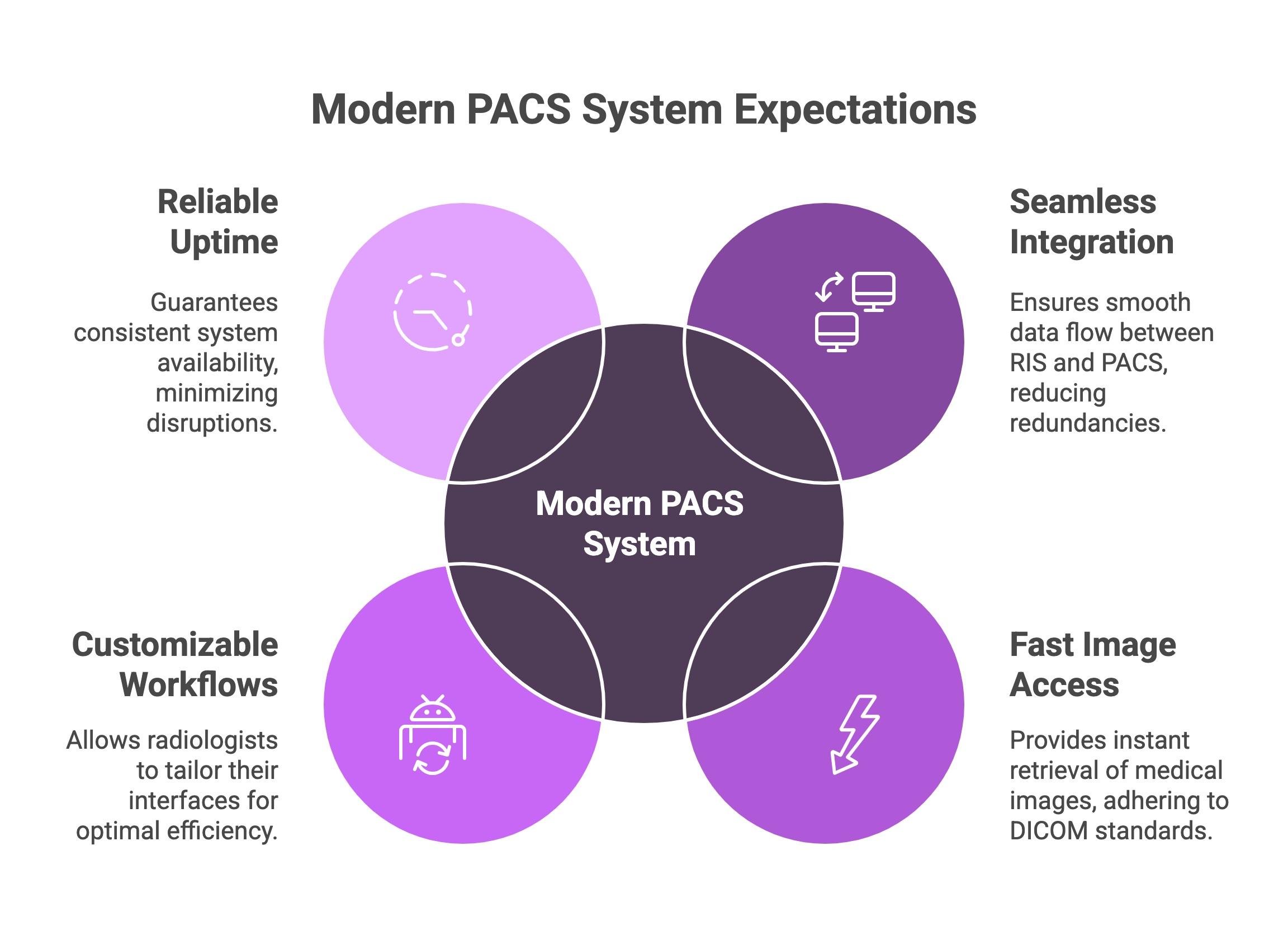
Modern PACS System Expectations
Fix the Root Cause—Not Just the Symptoms of PACS Complaints
One PACS meltdown may highlight deeper structural issues in the information system or the departmental approach to diagnostic radiology. Conducting routine audits, including a peer review process, reveals where the bottlenecks and potential errors lie.
Perhaps your classification system for images is inconsistent, or maybe your system for referencing clinical information is outdated. By addressing these root causes, you can cut down on the frustration that leads to radiology AI projects being derailed or frequent calls to the Department of health and Human Services over compliance concerns. When you align your PACS software with the everyday demands of a radiology practice, you reduce the chance of repeated errors occurring.
A solution that merges seamlessly with teleradiology and allows quick reading for multiple radiology modalities helps ensure consistent turnaround times. Finally, a cloud-hybrid architecture mitigates the pitfalls of a purely on-prem or purely cloud approach, giving you the best of both worlds.
How ProtonPACS Helps Eliminate PACS Complaints
ProtonPACS builds on advanced imaging informatics to ensure minimal system issues and maximum diagnostic imaging efficiency.
By addressing the complexities of a Department of Veterans Affairs medical center or a large health system, ProtonPACS ensures that local PACS workstations and remote sites are in sync. Through integrating the healthcare enterprise standards, we aim to remove communication barriers among healthcare professionals. This approach also means streamlined PACS storage capacity, so that MRI scans, CT scans, and X-ray images are always available.
ProtonPACS follows best practices set forth by organizations such as the American College of Radiology and supports a wide spectrum of imaging examinations, keeping the entire radiology department working in harmony.
Don’t Let Your Team Suffer Through Another Slow PACS Day
If you’re using an existing PACS that causes constant headaches, you might notice repeated slowdowns or frequent calls for a new PACS installation. Perhaps your imaging tests are often delayed, or staff complaints about “types of bias” in the system are on the rise.
Radiologists deserve technology that seamlessly integrates with the medical record, not something that demands extensive manual data entry or rethinking peer review to catch errors. Aligning leadership—IT, administrative teams, and radiology specialists—ensures everyone works toward a common goal: a more effective picture-archiving solution.
The identification of system needs in a large healthcare enterprise might differ from those in a private radiology practice. Regardless, a scalable approach that supports your entire imaging department is crucial for the well-being of staff and the safety of patients.
Outcomes of an Optimized PACS: What Your Team Can Expect
An optimized PACS architecture helps your department of radiology reduce the burden of daily “firefighting.” By prioritizing swift access to diagnostic imaging, you lower the risk of delayed diagnoses in radiology with emphasis on consistent outcomes. That means fewer calls to troubleshoot a workstation or to address a diagnostic error.
Ultimately, the satisfaction of search among your clinical team soars when they can retrieve any medical image quickly, whether that’s an X-ray from Massachusetts General Hospital or an MRI from the Department of Veterans Affairs. This improvement in speed and reliability leads to a change in performance metrics across your healthcare systems.
With fewer breakdowns, the error rate drops, the staff remains more engaged, and the intangible benefits of less stress and improved morale resonate across the entire clinical radiology workflow. In short, you get the trifecta of faster radiology report creation, better imaging results, and higher staff satisfaction.
Conclusion: The Right PACS Makes Radiology Work Smarter
In any department of health and human services environment or private radiology practice, the ultimate goal is to improve radiology services and outcomes. A well-chosen PACS system, backed by a robust communication system and thoughtful design, can clear obstacles and unite your team around a single platform.
That’s exactly what ProtonPACS delivers—an enterprise PACS built for radiology, with less friction, improved imaging studies management, and fewer disruptions. Are you ready to replace your old picture archiving approach and adopt a system for seamless integration across modalities? If so, it’s time to explore how ProtonPACS can enhance your clinical radiology practice.
Don’t let your radiologists grapple with endless system issues or a labyrinth of PACS viewers. Contact us today to schedule a consultation or a personalized demo. Together, we’ll design a solution that keeps your radiology department running smoothly, so your team can do what they do best—deliver top-notch patient care.
