
Diagnostic bottlenecks in radiology don’t just slow down workflows — they impact patient care, strain IT infrastructure, and increase stress for radiologists and PACS administrators. When diagnostic images take too long to process, when workflows aren’t optimized, or when IT systems struggle to keep up with increasing demand, the result is frustration at every level.
The good news?
Many of these bottlenecks have solutions. By identifying common challenges and implementing the right technologies, radiology teams can streamline operations, reduce delays, and improve overall efficiency.
What are common bottlenecks in radiology departments?
PACS admins, IT teams, and radiologists often face challenges that contribute to slowdowns in timely and accurate assessments. These bottlenecks include:
- Aging IT infrastructure: Outdated systems struggle to process high-resolution images quickly, leading to delays.
- Inefficient workflows: Poorly optimized processes create bottlenecks, increasing turnaround time for critical diagnostic information.
- Growing imaging volumes: Rising patient numbers mean radiology teams handle more images than ever, putting pressure on IT resources.
- Staffing shortages: A lack of trained radiologists and IT specialists stretches existing teams thin, exacerbating delays.
- Limited access to patient data: When imaging data isn’t easily accessible or incomplete, radiologists lose valuable time tracking down information.
These bottlenecks don’t just impact efficiency — they also create stress for radiology teams, increase the risk of errors, and slow down patient diagnosis and treatment.

How Slow Image Processing Bottlenecks Impact Patient Care
When things slow down in radiology, it affects more than just hospital workflows — it impacts patients directly. Delays in reading and processing images mean patients wait longer for diagnoses and treatment, which can lead to anxiety and slower medical care.
Backlogs make it harder for radiologists to keep up, causing bottlenecks that push back important medical decisions. On top of that, if results aren’t shared efficiently with doctors, miscommunication can lead to treatment delays or even incorrect care plans.
These delays also affect referring physicians, surgeons, and specialists who rely on imaging results for treatment planning. Surgeons may have to delay procedures if imaging reports aren’t available in time. Oncologists awaiting scans for cancer staging could face setbacks in starting chemotherapy or radiation therapy. The entire healthcare system feels the ripple effects of radiology bottlenecks, making it critical to streamline workflows for better patient care.
Fixing these issues by improving workflows and communication ensures that patients get the timely, accurate care they need.
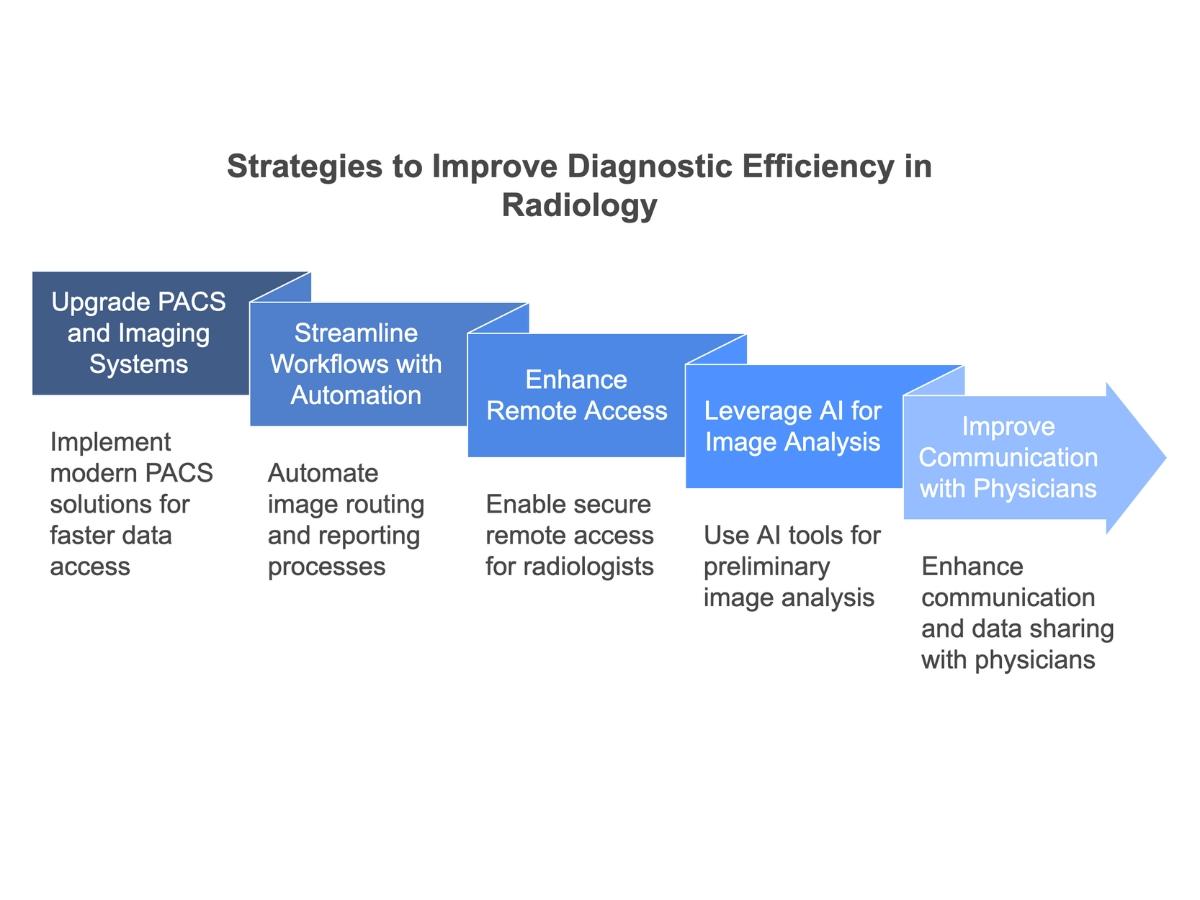
Strategies to Improve Diagnostic Efficiency in Radiology
1. Upgrading to Modern PACS and Imaging Systems
One of the biggest culprits behind slow image processing is outdated IT infrastructure. Implementing modern PACS solutions with cloud-based capabilities ensures faster access to imaging data, reducing delays caused by slow system performance. Upgrading to high-performance servers and optimized storage solutions also helps radiology departments handle increasing imaging volumes with ease.
2. Streamlining Workflows with Automation
Automated image routing and prioritization help radiologists focus on the most critical cases first, reducing backlog. Standardized reporting templates and structured data entry also speed up the diagnostic process while maintaining accuracy.
3. Enhancing Remote Access for Faster Turnaround
When radiologists are tied to on-site workstations, diagnostic delays become inevitable. Implementing secure remote access solutions allows radiologists to review images from any location, improving response times and reducing bottlenecks caused by staffing limitations. Telemedicine integrations further expand access to off-site specialists when needed.
4. Leveraging AI for Image Analysis and Prioritization
AI-powered tools can assist in preliminary image analysis, flagging abnormalities, and prioritizing urgent cases. This doesn’t replace radiologists but rather enhances efficiency by reducing time spent on routine reads, allowing specialists to focus on complex cases. AI-assisted triage ensures that critical cases receive immediate attention while lower-priority studies are managed in the background.
5. Improving Communication Between Radiology and Referring Physicians
Clear and timely communication is essential to avoid delays in patient care. Strategies to enhance collaboration include:
- Standardized reporting templates to ensure clarity and consistency.
- Integrated EHR and PACS systems for seamless data sharing.
- Real-time notifications to keep referring physicians informed as soon as reports are ready.
- Interdisciplinary case discussions to ensure efficient decision-making on complex cases.
These steps help eliminate the back-and-forth delays that often contribute to diagnostic bottlenecks.
Reducing Radiologist Workload and Preventing Burnout
Radiology teams already work under immense pressure, and bottlenecks only add to the burden. To prevent burnout and improve efficiency, radiology departments can implement the following strategies:
- Flexible staffing models: Utilizing teleradiology and remote reading capabilities helps distribute workloads evenly, reducing stress on in-house staff.
- AI-assisted workload balancing: AI tools can help prioritize cases and distribute reading assignments, allowing radiologists to focus on high-complexity cases while AI handles preliminary scans.
- Collaborative case reviews: Regular interdisciplinary meetings encourage real-time discussions, minimizing back-and-forth delays and improving diagnostic accuracy.
- Burnout prevention initiatives: Hospitals that prioritize work-life balance through optimized scheduling and workflow improvements see better staff retention and fewer errors.
By implementing these strategies, radiology teams can work more efficiently without sacrificing accuracy or patient care quality.
How Radsource Helps Radiology Teams Overcome Bottlenecks
At Radsource, we work with radiology teams across the country to implement solutions that address workflow inefficiencies and IT pain points. Our high-performance PACS solutions are designed to optimize image processing speeds, improve system reliability, and enhance access to imaging data. Whether it’s through cloud-based PACS, AI-powered workflow enhancements, or secure remote access, we provide the tools and support needed to streamline radiology operations.
To explore real-world case studies and expert insights on optimizing radiology workflows, visit our Web Clinics — a comprehensive resource covering imaging best practices and innovative radiology solutions.
A Future Without Bottlenecks
Diagnostic delays don’t have to be an unavoidable part of radiology. By modernizing technology, improving workflows, and leveraging AI-driven tools, radiology teams can drastically reduce bottlenecks — leading to faster diagnoses, improved patient outcomes, and reduced stress for PACS admins and radiologists alike.
If your radiology department is experiencing workflow slowdowns, Radsource can help. Contact us today to explore tailored solutions that improve efficiency and reduce diagnostic bottlenecks.
